Content
An itchy sewn-in label is one of the most common reasons men stop wearing otherwise well-made briefs. Within the first hour of wear, a stiff woven tag presses into the hipbone. Many men cut the tag out, which fixes one problem and creates another: the remaining stitch line and sharp edge rub against skin, causing the same irritation the person tried to eliminate.
Tagless construction removes the problem at the source. Instead of stitching a care label into the garment, the manufacturer prints the brand mark, size, and care information directly onto the inner waistband using a heat-transfer or direct-print method. The result is a smooth inner surface with nothing to scratch against.
For anyone developing a men's underwear line, this detail is not a minor choice. It affects fit perception, skin sensitivity, and how quickly a product feels worn in. If you are evaluating styles for a new range, tagless men's briefs show how this construction should feel in practice.
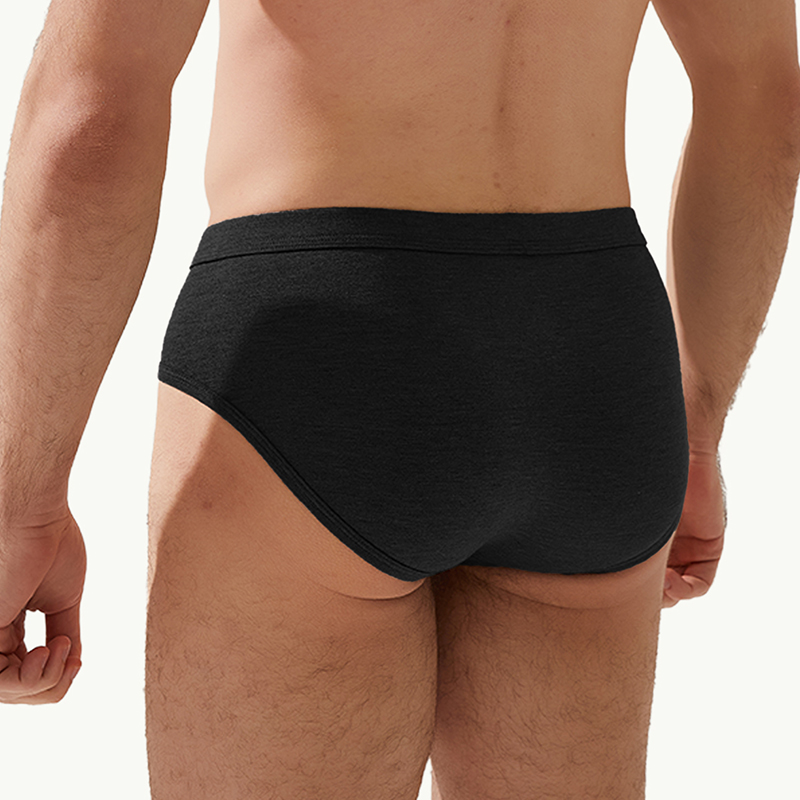 Wholesale Mens Tagless Briefs Suppliers, OEM/ODM Company - Nantong Tianhong TextNantong Tianhong Textile Technology Co., Ltd is a China custom Mens Tagless Briefs supplier and company, We specialize in wholesale Mens ...View Product →
A tagless brief is not simply a pair without a label. The tagless label must be durable enough to survive daily wear, washing, and stretching without peeling, cracking, or turning into a stiff heat-transfer patch. The printable waistband is the foundation: a low-profile elastic with a soft surface allows the ink to flex with the fabric instead of cracking.
Low-profile printed waistband: A smooth band with no raised label edge or stitch holes through the print.
Contoured front pouch: Provides support and prevents the fabric from twisting against sensitive areas.
Four-needle six-thread flat seams: Reduce seam bulk at the crotch and leg openings, lowering friction during movement.
Stay-put leg bands: Hold the brief in place without squeezing or creating visible lines.
Ask for a wash-test report that includes at least 30 home launderings. The printed text should remain legible, the waistband should keep its recovery, and the print should not crack or peel. In bulk production, this test should be part of the quality assurance plan, not a one-time sample check.
| Aspect | Tagless briefs | Traditional labeled briefs |
| Skin irritation | No sewn-in tag to rub against the skin | Stitch-on label can chafe and leave rough edges |
| Silhouette | Cleaner and smoother under clothing | Label bulk can be visible in fitted garments |
| Care instructions | Printed directly on fabric; depends on print durability | Woven labels are very durable but physically present |
| Durability | Relies on print quality and elastic recovery | Tag stitching can fray, but label remains legible |
| Comfort perception | Often described as second-skin comfort | Familiar but with a higher risk of itch |
Tagless construction only helps if the fabric itself is comfortable. The most effective blends combine natural fibers with a small percentage of elastane. The elastane provides recovery, preventing the brief from bagging out in the hips, while the main fiber controls moisture and feel against skin.
Bamboo viscose is a frequent choice for tagless briefs because of its soft hand feel, breathability, and natural anti-odor performance. When blended with 5-10% spandex, the fabric drapes well and bounces back after washing. It is also a strong candidate for brands looking for sustainably sourced materials, especially when the bamboo is certified under FSC or the finished fabric carries Oeko-Tex 100 certification. You can read more about why bamboo viscose briefs are a popular choice for everyday comfort, or evaluate bamboo-based blends when you sample.
Crisp, breathable, and easy to print on, with a slightly more traditional feel.
Better shape retention and a smoother surface, suited for athletic cuts and low-sheen finishes.
A lower-impact option for performance briefs, but the printing process must be tested carefully to avoid stiff spots.
The fiber blend and the label printing process must be designed together. A high-twist yarn or a brushed inner surface can make heat-transfer printing less effective, so always ask the factory to approve the print method on your chosen fabric.
Tagless briefs are held to a higher standard than basic underwear, because the absence of a sewn label shifts quality concerns to the print and waistband. A competent manufacturer will verify:
Print adhesion after laundering and tumble drying
Elastic recovery after repeated stretching
Shrinkage and twist after washing
Skin-friendly pH and dye fastness
Absence of harmful substances in prints and elastic
Look for factories that can document Oeko-Tex 100 for the finished brief, FSC for bamboo fiber sourcing, and OCS when organic cotton is used. These certifications give your brand a defensible story and reduce regulatory friction in North American and European markets.
For a brand, the fastest route to launch is to work with a factory that already produces tagless styles for export markets. A mature partner can advise on waistband width, print chemistry, and fabric weight before you commit to a full production run. That is why we built a dedicated OEM underwear manufacturing service that takes a specification from comment to bulk without guesswork.
What is the minimum order quantity for a custom waistband print?
Which fabric blends have already been tested with tagless printing?
Can the factory provide a 30-cycle wash test report before sample approval?
What certifications are available for the fabric, print, and finished product?
How are seconds and quality rejects handled in bulk orders?
Tagless briefs are easier to get wrong than they look. If the waistband is too firm, the print will crack. If the elastic width is wrong, the label may fold during wear. If the fabric has too much surface texture, the heat-transfer print can peel. A factory that knows these failure modes will fix them in development, not after a full container has shipped. Once you have a clear specification, contact our team to review samples, packaging, and your target timeline.
Tagless construction is not a premium extra anymore; it is an expectation in most developed underwear markets. Men want the same clean, second-skin comfort from their everyday briefs that they expect from sports baselayers. For brands, the challenge is to balance the softness of the fabric, the durability of the printed label, and the cost of quality checks.
Start with the facts: specify a tagless design, select a fabric that passes wash testing, and choose a manufacturing partner that treats print adhesion as a quality-critical step. The result is a brief that does not remind the wearer it is there, which is exactly what a men's tagless brief should do.

Copyright © Nantong Tianhong Textile Technology Co., Ltd. All Rights Reserved.
 Room 806, Building D, Jingyang Plaza, Chongchuan District, Nantong City, Jiangsu Province,china


 English
 Español
 русский
 عربى
عربى