Content
Ask a group of men which fabric makes the most comfortable underwear and modal comes up again and again, often from someone who bought one discounted pair and quietly rebuilt the whole drawer around it. The preference is grounded in measurable properties rather than hype: modal is a finer and smoother fiber than cotton, it absorbs and releases moisture well, and it holds color through repeated washing. This guide explains what modal actually is, how it performs in men's underwear, where it beats and loses to bamboo viscose, cotton, and polyester, and what to check before buying a single pair or commissioning a full production run.
Modal is a regenerated cellulose fiber, which places it in the same family as viscose rayon and bamboo viscose. Producers take cellulose pulp, commonly sourced from beech and other hardwoods, dissolve it through a chemical process, and force it through spinnerets to form fine continuous filaments. Because the raw material starts as plant cellulose but becomes a fiber through chemical processing rather than mechanical extraction, modal is more precisely described as a semi-synthetic fiber than a natural one. The same distinction applies to bamboo viscose, which is frequently marketed with natural imagery even though its production route is chemically similar to conventional viscose.
Two technical traits separate modal from standard viscose. The first is wet strength: ordinary viscose can lose roughly half of its strength when soaked, while modal retains much more of it, so fabric survives machine washing with less pilling, stretching, and surface damage. The second is fineness. Modal filaments are typically finer than viscose, and their smoother surface lowers friction against the skin, which is the main reason the fabric feels silky rather than merely soft. Modal also has a high affinity for dyes, so the deep navy and black shades that dominate men's basics stay deep instead of fading toward grey after a dozen wash cycles.
In an underwear context, those fiber-level traits translate into everyday benefits. The smooth surface reduces the friction that causes chafing during walking, cycling, and long desk days, which matters for men with sensitive skin. The fiber's moisture uptake, often cited as around 50 percent higher than cotton at equal weight, lets the fabric pull sweat off the skin and release it as it dries, so the garment feels cool rather than clammy. Modal also drapes close to the body without stiffness, which is why modal boxer briefs tend to sit neatly under tailored trousers without bunching.
The honest limitations are worth knowing before you commit. Pure modal has almost no elastic recovery, so virtually every modal pair on the market blends in roughly 5 to 10 percent spandex; without it, knees and waistlines sag. Modal wrinkles more readily than polyester and costs more than comparable cotton knits. It also dries more slowly than synthetic performance fabrics, so for high-output training in hot weather, a well-designed mesh construction still has the advantage, and many men keep a synthetic pair specifically for the gym.
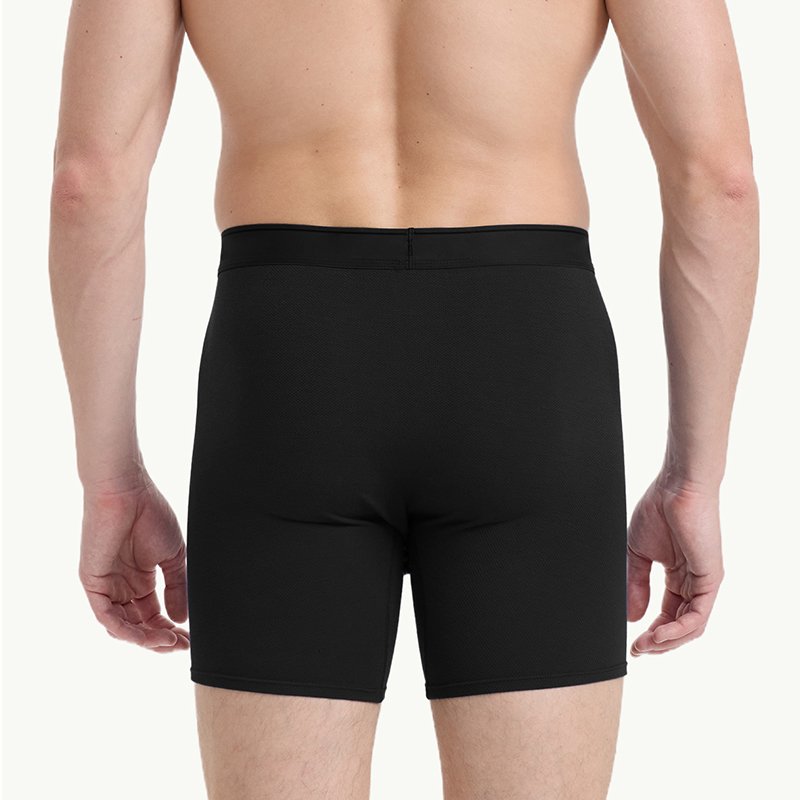 Bamboo Viscose Blend Mesh Cooling Boxer BriefsWith 89% bamboo viscose, 8% spandex, and 3% polyester, these boxer briefs offer the airflow of mesh the article recommends for hot-weather training, plus a non-digging waistband, open fly, seamless back, and tagless comfort.View Product →
The comparison below simplifies how the four fibers most used in men's underwear behave in finished garments. Real products vary with knitting, finishing, and blend ratios, but the table is a reliable starting point for narrowing choices.
| Fiber | Hand feel | Moisture behavior | Strength when wet | Typical role in men's underwear |
|---|---|---|---|---|
| Modal | Very soft, silky | Absorbs and releases moisture well | High for a cellulosic fiber | Premium boxer briefs, trunks, briefs |
| Bamboo viscose | Soft, smooth | Good absorption | Moderate, viscose-type | Everyday comfort and sensitive-skin styles |
| Cotton | Familiar, slightly textured | Absorbs but dries slowly | Stronger when wet | Classic briefs and value basics |
| Polyester | Slick, lightweight | Wicks rather than absorbs | Very strong | Sport and mesh cooling styles |
Bamboo viscose deserves particular attention because it is the closest cousin to modal. Both are regenerated cellulose fibers made through chemical processing, and both deliver a cool, smooth hand feel, but modal generally keeps more strength when wet, which shows up as better surface stability over years of laundering. For brands building a collection, the practical move is to sample both fabrics in the same fit block before committing, since the difference in wear feel is small while the difference in cost and sourcing can be significant. There is a detailed look at why bamboo viscose underwear has become so popular for readers weighing the two against each other.
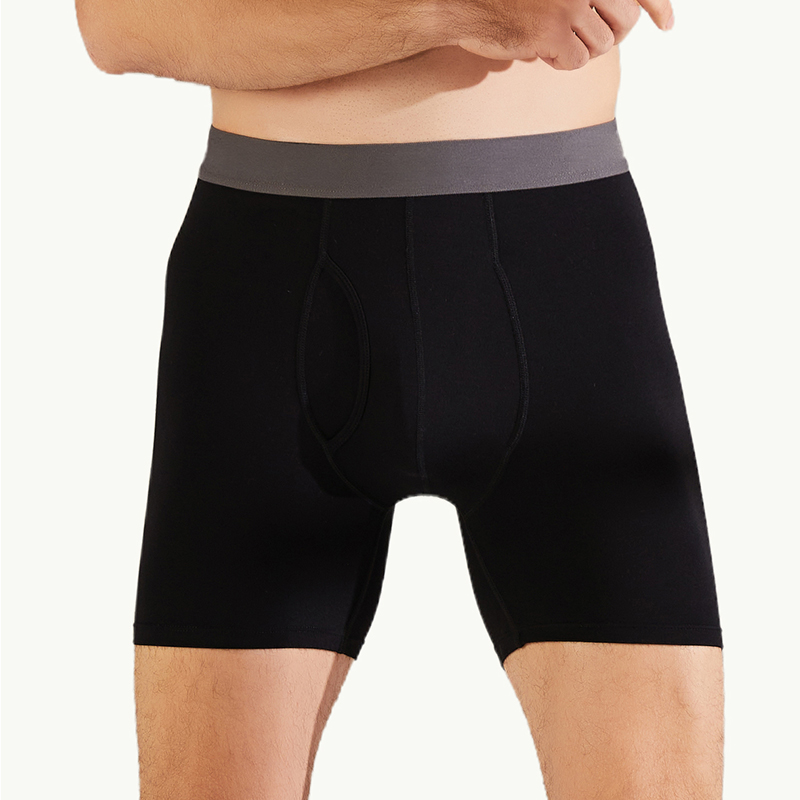 High-Content Bamboo Viscose Boxer BriefsMade from 92% bamboo viscose with 8% spandex, this pair illustrates the regenerated cellulose fiber the article compares to modal—cool, smooth, and breathable—while the spandex adds the elastic recovery pure modal lacks.View Product →
Fabric composition and weight determine how a modal garment behaves long before styling does. Most quality men's underwear knits sit between roughly 160 and 220 gsm: light enough for breathability, heavy enough to keep opacity and shape. A 95/5 modal-spandex blend is the mainstream choice for a soft daily pair, while a 90/10 build gives more compression and snap for athletic fits. When evaluating samples, stretch the cuff of the leg opening; recovery should be immediate, without a visible ripple in the knit.
Hardware matters as much as fiber. A soft covered waistband keeps the garment in place without digging into the abdomen during long sitting hours. Flatlock seams, or the four-needle six-thread construction many factories use on boxer briefs, create a flat join that will not ridge under slim trousers. A contoured pouch or U-shaped front opening improves support and airflow, and tagless labeling removes the itch point of traditional sewn labels. Seamless knitted trunks take this logic further by removing side seams altogether, which suits men who find even flat seams noticeable under fitted clothing.
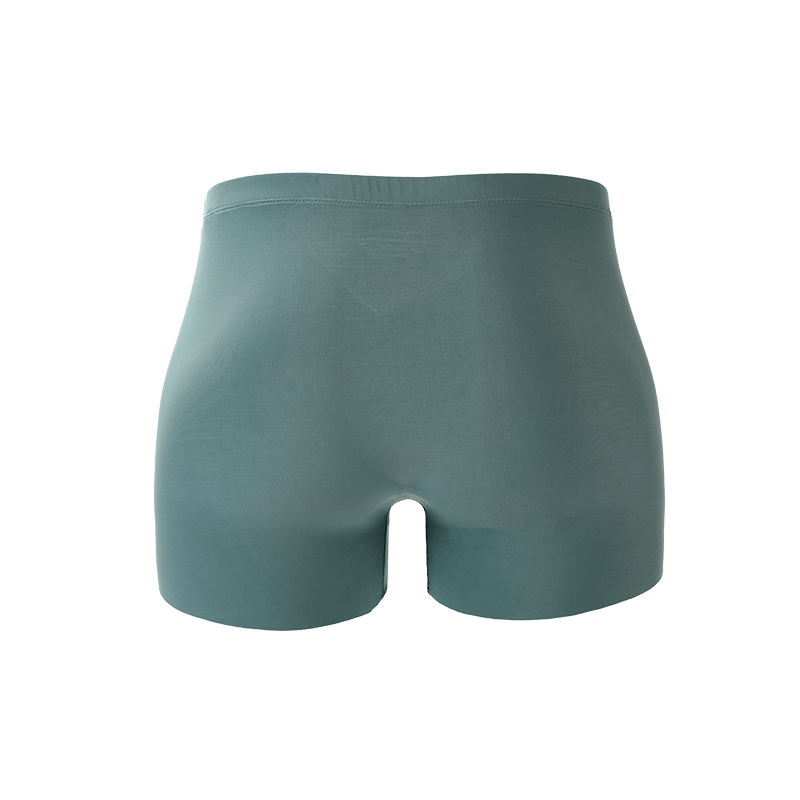 Men's Seamless Trunk in Multiple Fabric OptionsBy removing side seams entirely, this trunk suits men who notice even flatlock seams under fitted clothing. Available in recycled nylon, polyester, bamboo-cotton, cotton-modal, and modal french terry stretch options.View Product →
A short checklist keeps the decision objective:
From a manufacturing standpoint, modal knits behave much like other regenerated cellulose knits, so a factory experienced in bamboo viscose underwear already commands the critical skills: stitch selection, tension control, shrinkage management, and dye fastness on cellulosic yarns. Certifications transfer as well. Oeko-Tex Standard 100 verifies that finished garments meet limits for harmful substances, and FSC documentation supports traceable cellulose sourcing, both of which matter increasingly to European and North American buyers.
Tianhong Textile, an underwear manufacturer based in Nantong since 2001, produces bamboo viscose boxer briefs, briefs, seamless trunks, and related styles for brand clients across Europe, North America, and China, and applies the same knitwear discipline to regenerated cellulose fabrics generally. Brands evaluating modal can review the company's OEM underwear production capabilities to see how sampling, fabric development, and certification support fit into a standard development cycle.
Modal earns its reputation in men's underwear through verifiable properties: a fine, smooth fiber that manages moisture, resists fading, and survives laundering better than standard viscose. Its limits, mainly the need for spandex and slower drying than synthetics, are solved through blending and honest use-case matching. Compare it directly against bamboo viscose before you buy or before you spec a collection, check blend ratio, fabric weight, and seam construction on any sample, and the fabric will deliver exactly the comfort that its reputation promises.

Copyright © Nantong Tianhong Textile Technology Co., Ltd. All Rights Reserved.
 Room 806, Building D, Jingyang Plaza, Chongchuan District, Nantong City, Jiangsu Province,china
 English
 Español
 русский
 عربى
عربى