Content
Last month, a buyer for a European underwear brand received a sample box from a prospective factory. Inside were twelve pairs of men's boxer briefs in different colors. Within thirty seconds, she had already ranked half of the packs as low-end. The clue was not in the printed fabric tag but in the seams, the waistband, the crotch panel, and the actual fiber composition behind the soft hand feel.
If you are sourcing men's boxer briefs for your brand, the most useful shortcut is to evaluate four things before negotiating price: fiber, fabric construction, seam quality, and third-party certification. Style matters for merchandising, but these four factors decide whether the product will come back as a return, an exchange, or a repeat order.
Boxer briefs combine the coverage of loose boxers with the support of briefs. The fitted body skims the thigh, prevents fabric from gathering under trousers, and stays in place during movement. In our order books, boxer briefs are the largest men's underwear style among private-label programs, ahead of trunks, briefs, and traditional boxers.
The reason is practical: they work across the largest number of body shapes and wearing occasions. A well-made pair can go from office to gym without a change, which is exactly why brands keep them as the anchor of their men's basics collection.
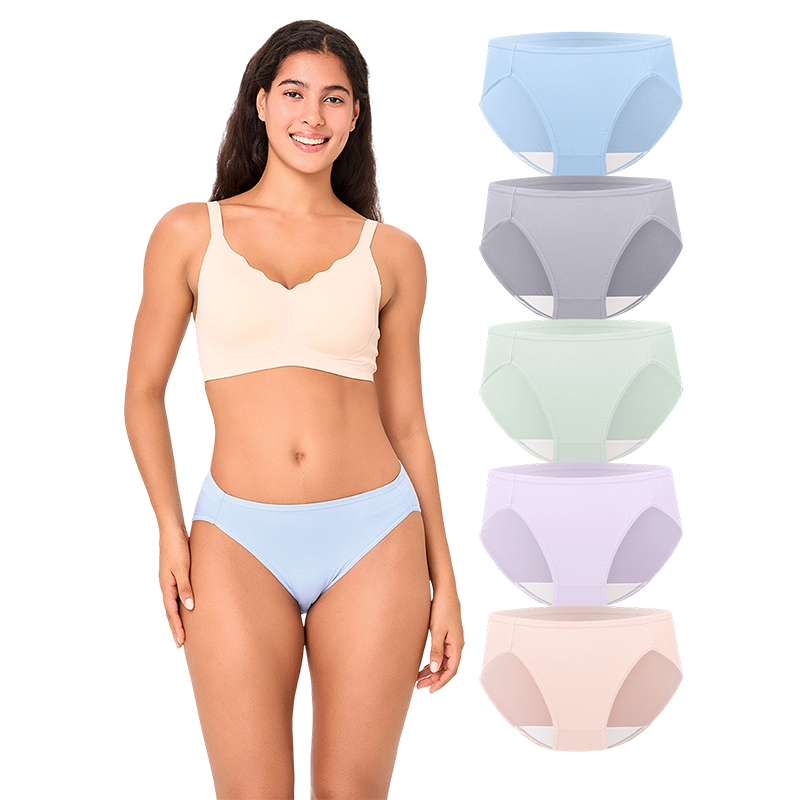
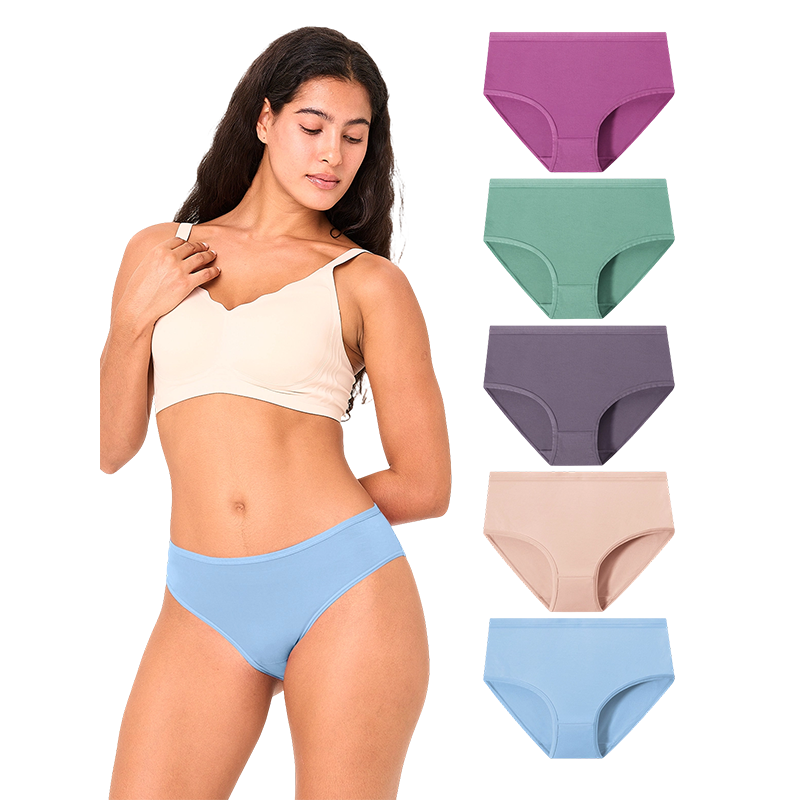
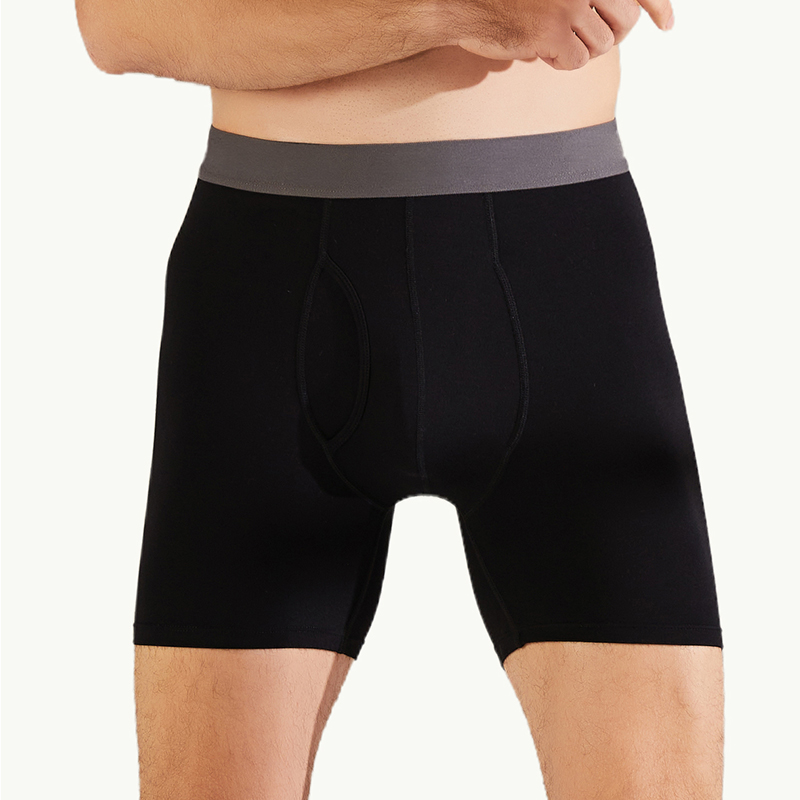 Bamboo Viscose Everyday Boxer Briefs with Open FlyThis everyday pair blends bamboo viscose and spandex for a breathable, snug fit ideal for office-to-gym wear. The tagless, seamless back and open fly suit a wide range of body shapes, making it a practical anchor for any basics collection.View Product →
There is no single perfect fiber for every boxer brief, but each fiber or blend serves a different price point and end use. The table below summarises the trade-offs we use in our own sourcing conversations.
| Fiber | Best for | Key properties | What to verify |
|---|---|---|---|
| Bamboo viscose | Everyday softness and drape | Smooth hand feel, good moisture transport, moderate breathability | Confirm the chemical regeneration process and any organic claim |
| Cotton | Basic comfort and easy care | Breathable, absorbent, widely available | Check shrinkage and yarn count |
| Cotton + spandex | Stretch and shape retention | Better recovery than plain cotton, comfortable against skin | Check spandex percentage and elasticity loss after washing |
| Polyester + spandex | Sports and high-activity use | Quick drying, good colour fastness, lightweight | Request moisture-management finish and wash-test data |
| Nylon + spandex | Sleek fit and smoothness | Excellent shape memory, smooth surface | Check dye migration and seam slippage |
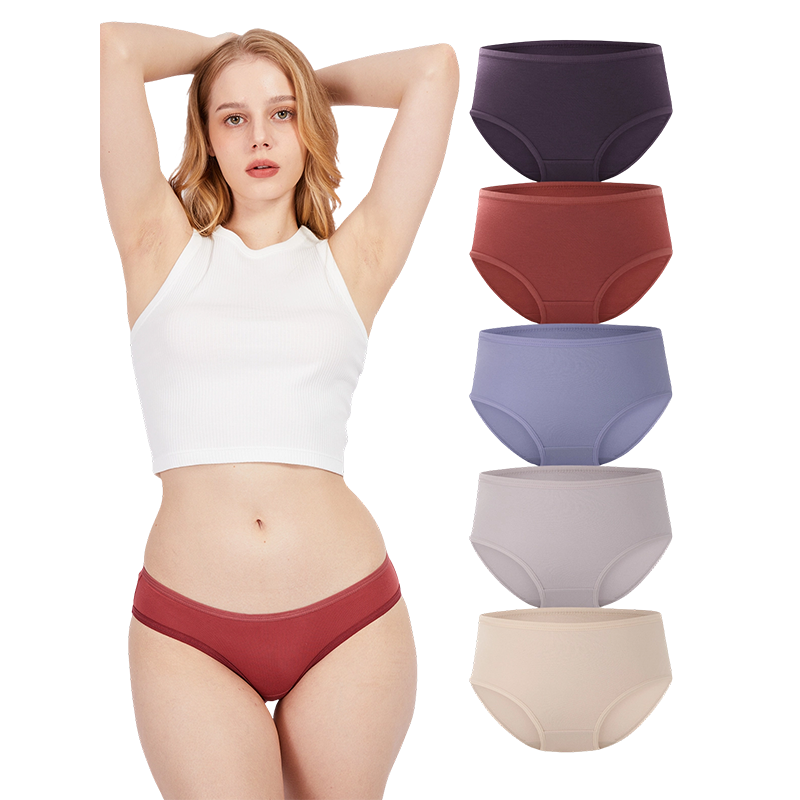
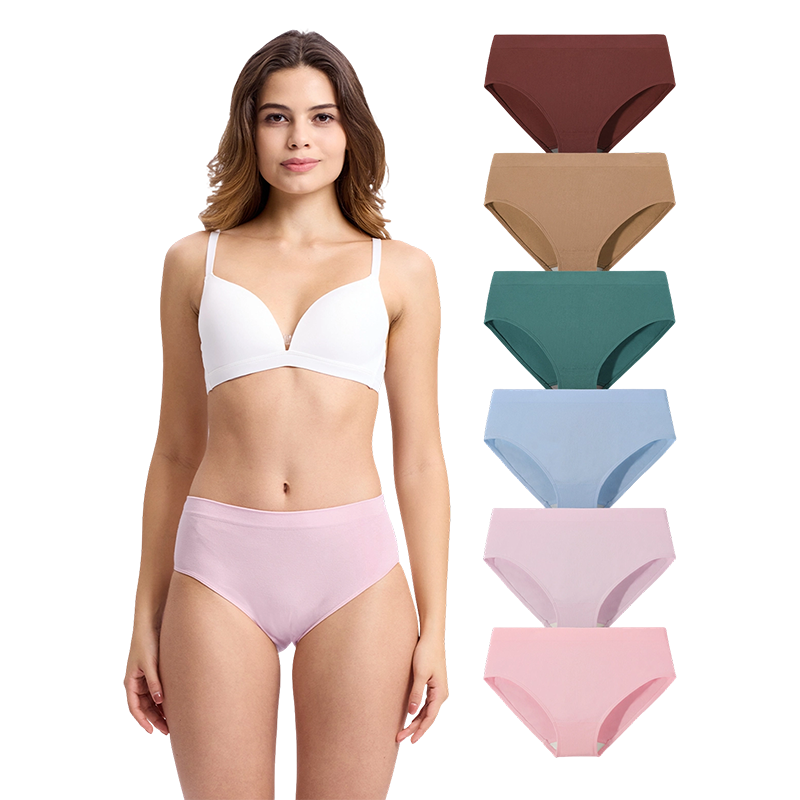
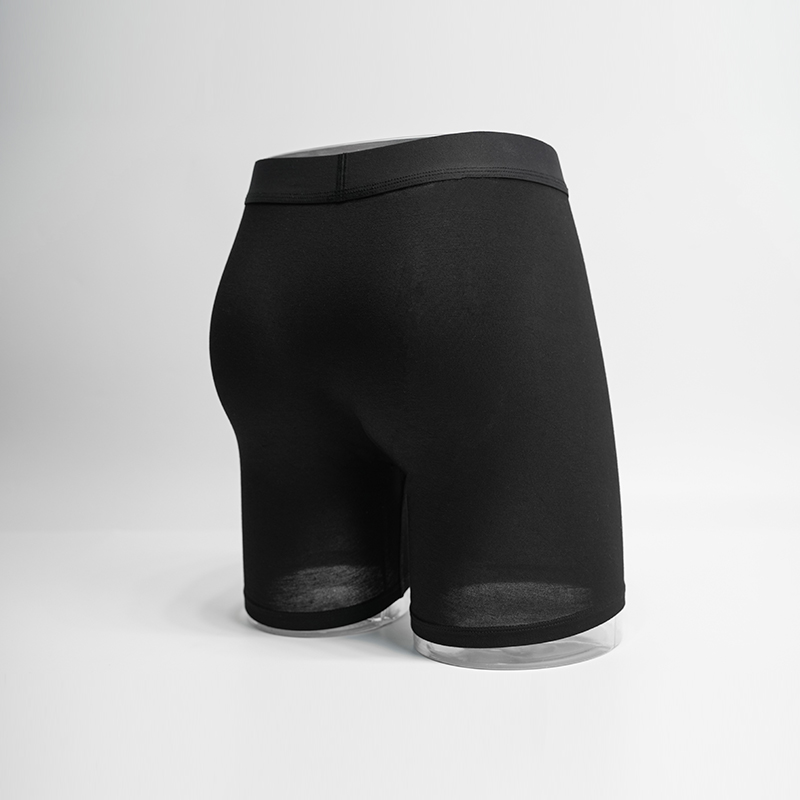 High-Support Boxer Briefs in Recycled Fabric BlendsPositioned for active wear, this style offers structured support with a U-shaped opening and firm leg cuffs. Available in recycled nylon and polyester blends, it prioritizes durability and fit—key factors when evaluating construction quality beyond the fabric.View Product →
Fabric gets the attention, but construction keeps the garment comfortable over a full day. Four-needle six-thread seams are the standard for premium basic underwear because they lie flat while withstanding repeated pulling. Check whether the side seams, back rise, and crotch junctions use this technique or a narrow overlock that can dig into the skin.
Waistband performance is equally specific. A good waistband holds without rolling and recovers after stretching. Look for a folded or elasticated band that has been sewn with a flat seam, not a thin elastic that twists after three washes.
For men's boxer briefs, the front opening changes the perceived quality. A simple vertical cut may gape or compress. A structured U-shaped opening creates space and support, especially when the crotch panel is shaped rather than sewn as a straight line. If you are sourcing sports-oriented boxer briefs, also check the leg cuff: it should be firm enough to stay in place but not so tight that it leaves red lines.
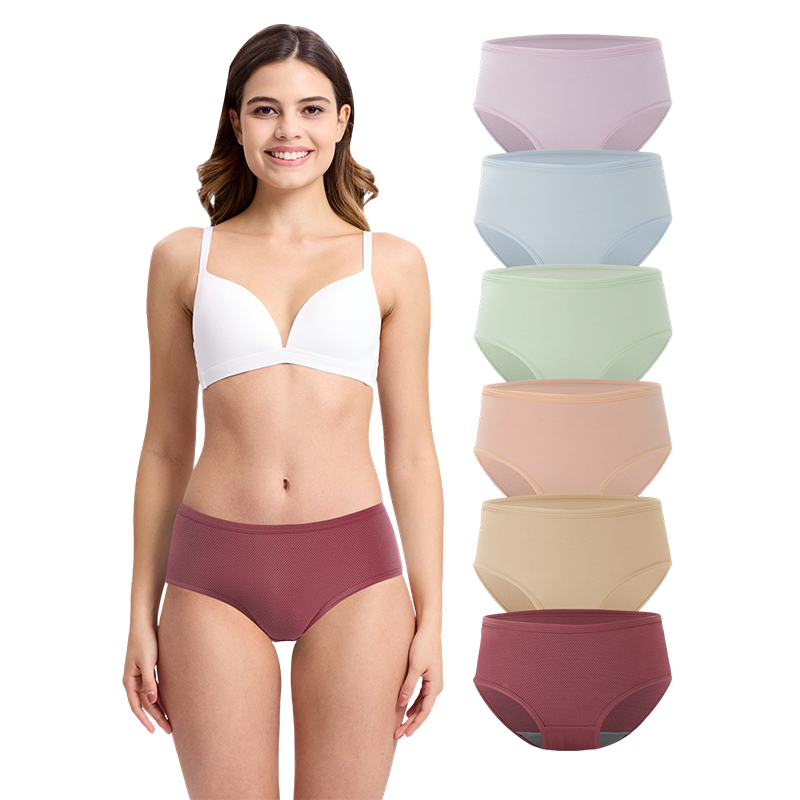
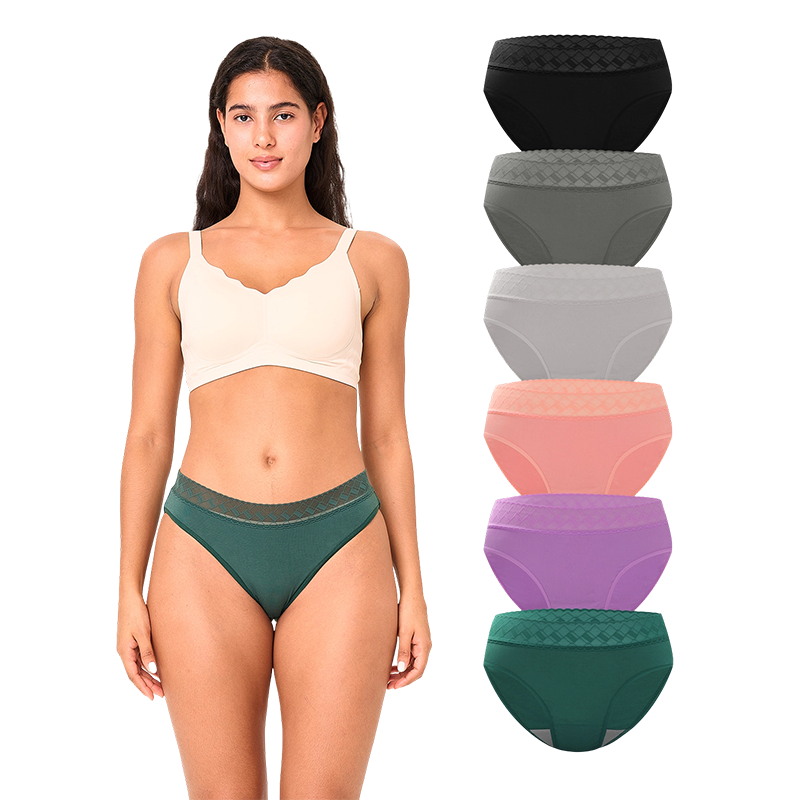
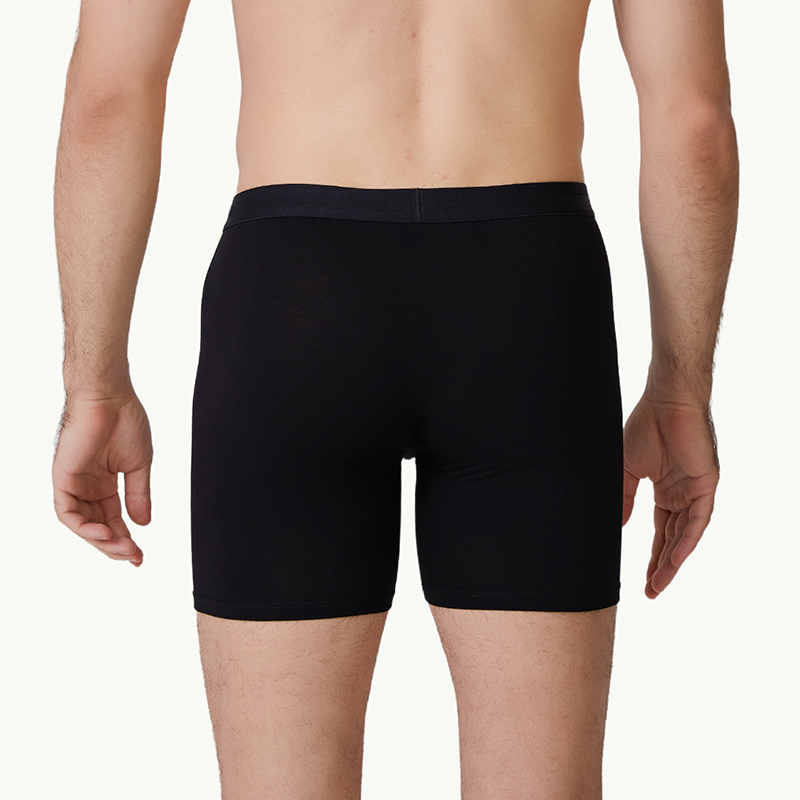 No-Ride-Up Extended Leg Boxer Briefs for All-Day WearEngineered with an extended leg and high bamboo viscose content, this pair prevents riding up and provides added thigh coverage. Its breathable fabric and snug waistband make it suitable for both active sessions and daily routines, especially for taller or larger builds.View Product →
Men's boxer briefs are not a one-size-fit-all product. Body shape changes the optimum rise and leg length. Taller wearers usually prefer an extended leg to stop the fabric riding up. Men with larger thighs need a cuff with higher stretch and a wider hem. Men who carry weight around the waist tend to choose mid- or high-rise styles for better coverage.
We measure three points during fit testing: waist, hip, and thigh. A size chart built on waist alone is a common source of returns. The best fit comes from grading the pattern from hip and thigh measurements, then validating it on real bodies across the expected size range. More detail on this process is available in our body-shape and comfort guide.
Once a sample passes your touch-and-feel test, the real work starts with documentation. A reliable supplier should provide a technical data sheet for each style: exact fiber percentage, fabric weight, shrinkage result, and color fastness to washing, rubbing, and perspiration.
Certifications reduce the risk of marketing claims. Oeko-Tex Standard 100 covers restricted substances in the finished garment. The Organic Content Standard (OCS) verifies organic fiber content when you need an organic label. Forest Stewardship Council (FSC) chain-of-custody is relevant when the fiber feedstock comes from responsibly managed plantations, including bamboo pulp.
Finally, ask how the factory handles revisions and mass-production consistency. The best indication is a structured communication process: sample approval, pre-production sample, inline inspection, and final random inspection. Our OEM workflow follows this sequence, and we share wash-test and inspection records with every buyer request.
Use this list when you compare quotes from different manufacturers:
These points sound basic, but they are the ones most likely to be glossed over when a supplier is pushing a low price.
The right men's boxer brief is not the one with the softest hand feel alone. It is the one that combines an honest fiber story, reproducible construction, and a factory that can prove what it writes on the spec sheet. Start with these checks before you talk about price, and you will avoid the most expensive kind of underwear: the one that has to be re-sourced after the first season.

Copyright © Nantong Tianhong Textile Technology Co., Ltd. All Rights Reserved.
 Room 806, Building D, Jingyang Plaza, Chongchuan District, Nantong City, Jiangsu Province,china
 English
 Español
 русский
 عربى
عربى