Content
Men's seamless underwear is a straightforward answer to two common complaints: chafing from side seams and visible lines under fitted clothing. For brands and retail buyers, the category also simplifies production, because one-piece knitting reduces cutting, sewing, and inspection steps compared with traditional seamed underwear. This guide walks through the fibre choices, fit details, and sourcing workflow that determine whether a seamless range performs well in the market.
Seamless underwear is knit as a single tubular garment on circular knitting machines. Instead of panels cut from flat fabric and joined by side seams, the body, waistband, and leg openings are formed in one pass. As a result, there is no seam running down the outside of the thigh, and the area under the waistband has no bulky stitching.
For men who wear close-fitting trousers or spend long hours seated, that means less friction, smoother lines, and a lower risk of edges digging into the skin. It also makes tagless construction easier to achieve, because the waistband can be knit with a soft elastic structure rather than a woven label insert.
From a production standpoint, seamless knitting has a different cost profile. Fabric wastage is lower, but machine setup and yarn quality requirements are higher. That is why most seamless ranges are made with high-recovery synthetic yarns such as nylon/spandex or polyester/spandex blends, together with cellulosic fibres like bamboo viscose where softness is a priority.
The fibre selection controls how the underwear feels, holds its shape, and behaves after repeated washing. The table below summarises the most common options for men's seamless underwear.
| Fibre system | Key properties | Best suited for |
|---|---|---|
| Bamboo viscose / spandex | Soft, absorbent, smooth drape; viscose is chemically processed, so it behaves consistently in knit | Daily wear, sensitive-skin ranges, moderate climates |
| Nylon / spandex | Elastic recovery, durability, smooth surface | Sports, long-wear, close-fit trunks |
| Recycled spandex blends | Performance similar to virgin spandex with a lower environmental footprint | Brands focused on circularity or sustainability claims |
| Polyester / spandex | Lightweight, quick-drying, but lower moisture absorption | Hot-weather and high-intensity activity ranges |
Bamboo viscose is not a raw plant yarn; it is a regenerated fibre created through chemical dissolution and spinning. That process can be managed to achieve a very consistent diameter and softness, which is an advantage for seamless knitting. If your brand's claim is organic sourcing, ask your supplier for OCS-certified bamboo viscose yarns.
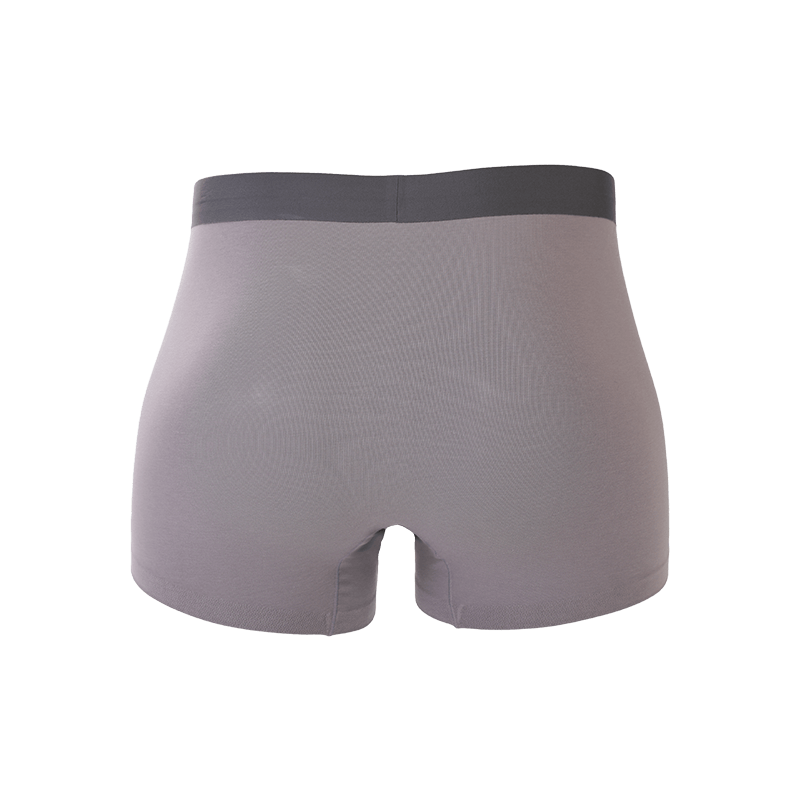 Recycled Spandex Trunk for Sustainable Seamless UnderwearThis eco-friendly trunk uses recycled cellulose fiber and offers customizable fabrics, waistbands, and craftsmanship, ideal for brands building a sustainability-focused seamless line.View Product →
For a recycled-content option that still delivers the smooth fit expected from seamless construction, a recycled spandex trunk is a practical starting point for a sustainability-focused line.
Because seamless underwear has no side seams, comfort depends on three variables: waistband elasticity, leg-opening construction, and the shape of the pouch area. The following quick reference grid can help a buyer match design details to target usage.
Soft low-profile waistband, medium rise, no-ride-up leg binding.
Contoured pouch support, high-recovery spandex, breathable mesh zones around the back.
Lightweight nylon or bamboo viscose blend, open-knit mesh panels, wide waistband without rolling.
Sit in a fitting room test: a seamless trunk should stay in place when you squat, twist, and walk for several minutes. Leg openings with integrated elastic or a folded knit edge reduce the chance of riding up. If you are evaluating multiple suppliers, ask for the same style in the same size and compare the waistband tension and leg-opening circumference.
For more guidance on how to assess fit and construction samples, refer to the wider buying factors covered in this seamless underwear buying guide.
 Knitted Jersey Trunk for Moisture Management and CustomizationThis seamless trunk features needle-punched sweat cloth technology for moisture control, with a snug fit and extensive fabric, waistband, and stitching options for OEM/ODM buyers.View Product →
A knitted jersey trunk is a good base sample to use when benchmarking how different yarns behave in the same seamless structure.
Working with an OEM or ODM supplier for seamless men's underwear follows a clear four-step sequence.
Seamless construction reduces the number of sewing operations, which can shorten lead times and improve consistency. It also changes the defect pattern: the most common issues appear in knitting breaks and elastic alignment rather than seam slippage. Quality inspection should therefore focus on fabric density, stitch uniformity, and waistband recovery.
For a brand entering the seamless category, the supplier's machine park, yarn sourcing ability, and quality system matter more than individual product samples. A factory that can develop the knitting program, test the fabric performance, and commit to auditable production is a strategic partner rather than a vendor.
Our factory in Nantong operates dedicated seamless machines and supports both OEM and ODM work. We help brands choose yarn systems, test waistband and leg-opening designs, and complete the transition from sample to serial production. This overview of our OEM services explains how that workflow is structured.
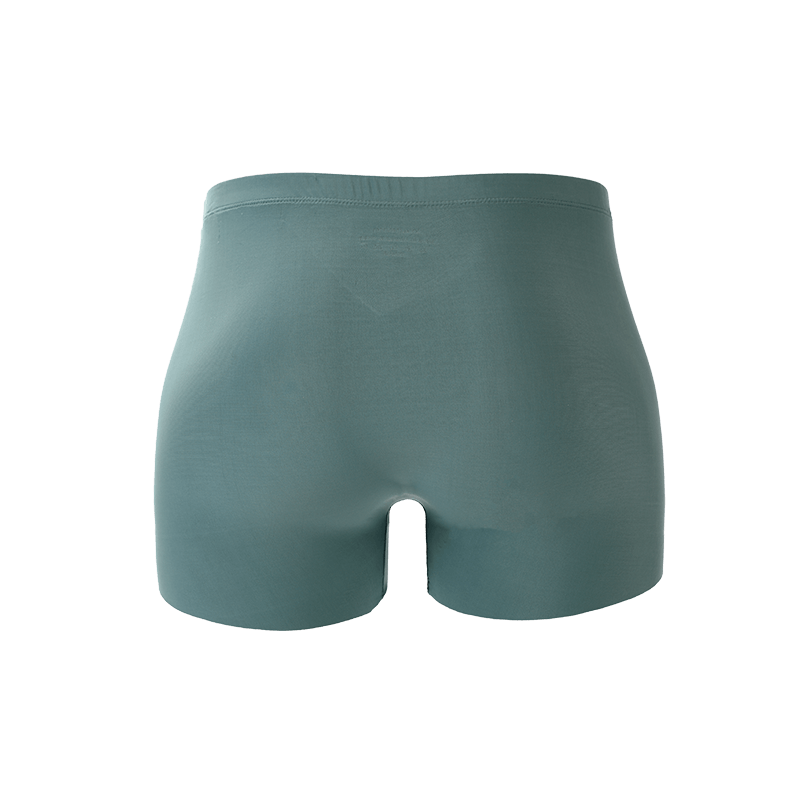 Standard Men's Seamless Trunk as a Fit ReferenceA polyester-spandex blend trunk with seamless front U construction, offering a baseline for fit and design, plus broad customization for fabric, waistband, and craftsmanship.View Product →
If you want to evaluate a standard seamless trunk before defining your own specification, the men's seamless trunk on our catalogue can act as a reference baseline for fit and construction.
A properly engineered seamless trunk should not ride up during normal movement. The leg-opening edge and spandex recovery are the key components; ask for a wear test or inspect the edge construction before confirming an order.
Machine wash in warm water with mild detergent, avoid fabric softeners, and dry flat in the shade. High-heat tumble drying accelerates spandex breakdown and reduces waistband tension over time.
Yes. Bamboo viscose is a soft, absorbent regenerated cellulose fibre that blends well with spandex for seamless knitting. It is not a raw plant yarn, so treat it as an engineered fibre choice. If your product story needs organic input, source OCS-certified viscose yarns rather than implying it is an unprocessed plant fibre.

Copyright © Nantong Tianhong Textile Technology Co., Ltd. All Rights Reserved.
 Room 806, Building D, Jingyang Plaza, Chongchuan District, Nantong City, Jiangsu Province,china

 English
 Español
 русский
 عربى