Content
Men's boxer briefs pair the support of briefs with the coverage of boxers, so fabric, fit and stitching decide how comfortable a pair stays all day. The pairs that earn repeat purchases combine a soft, well-balanced stretch fabric, a flat waistband and seams that hold up through the crotch and legs. If you are building a range, three specs cover most of the market: a bamboo viscose blend for everyday comfort, a high-support build for training, and a mesh-panel build for hot climates. All three are shown below.
Boxer briefs borrow from both of the older styles. They keep the stretch-knit, close-fitting body of briefs and extend the legs to around mid-thigh, which covers the inner-thigh zone where bare skin rubs during walking or training. Trunks follow the same idea with a shorter, square-cut leg. They sit flatter under slim clothing, but they protect less against friction.
That mix is why boxer briefs became the everyday default for most wearers, and why most men's ranges now lead with them. The table shows where each style fits.
| Style | Fit | Leg coverage | Works best for |
| Boxer briefs | Close-fitting, stretch knit | Mid-thigh | Everyday wear, sports, travel |
| Boxers | Loose, often woven | Full-length, wide leg | Sleep and relaxed days |
| Briefs | Close-fitting, no legs | None | Support under slim tailoring |
| Trunks | Close-fitting, square cut | Short leg | Low-rise trousers, athletic looks |
The silhouette works under denim, tailoring and sportswear alike. For a brand, that makes boxer briefs the anchor of a men's line, with other styles built around them.
Anyone who has finished a hot day in a cheap pair knows that comfort lives or dies in the fabric. Men's boxer briefs rely on a handful of proven blends, and each one feels different against the skin.
Soft hand feel, strong moisture absorption and a smooth, cool surface. The fabric drapes instead of gripping, so the legs hang cleanly. A common base for everyday comfort lines and for wearers with sensitive skin.
The classic choice. Cotton breathes and survives repeated washing, while a small spandex share supplies the recovery a fitted cut needs.
Slick, light and quick-drying. This is the usual base for sports pairs, often combined with mesh ventilation zones.
Mesh is a knitting method, not a fiber. Ventilation panels placed where heat builds up can be combined with any of the blends above.
Here is a typical everyday pair built on this logic:
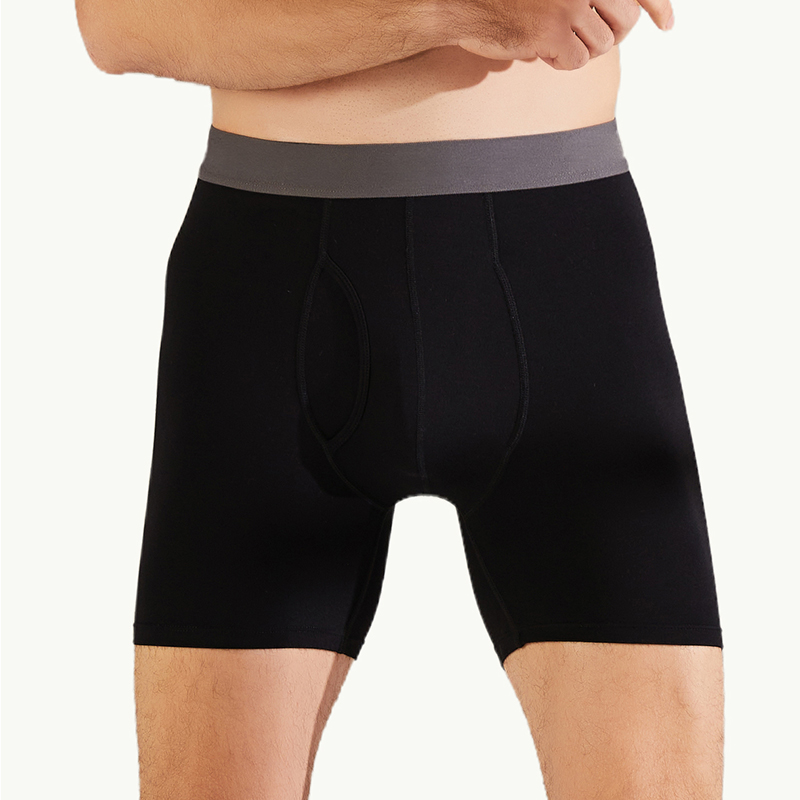 Bamboo Men's Boxer Briefs with Balanced StretchA 92% bamboo viscose, 8% spandex everyday pair illustrating the right fabric balance, with no-ride-up design and breathable all-day comfort.View Product →
The balance matters more than the headline fiber. With too little spandex the legs sag after a few hours. With too much, the fabric feels rubbery and traps heat against the skin.
Two pairs can use the same fabric and still feel like different products. These are the points our production team checks first when reviewing a specification, and the ones wearers notice within the first hour.
A covered elastic band with an even, wrap-style construction spreads pressure around the waist instead of digging in at one point. A tagless finish, with a printed or heat-transferred label, removes the scratch point at the back of the waistband.
The crotch and the leg openings take the most stress during movement. Four-needle six-thread stitching gives a flat, strong seam in exactly those zones, which is why it is the durability benchmark for men's and children's boxer briefs alike.
A contoured pouch or a U-shaped front opening gives anatomical support and adds ventilation where it counts. On longer training cuts, this detail does as much for comfort as the fabric.
Riding up is the most common complaint about the style. Well-engineered pairs deal with it through a slightly longer leg, tuned tension at the hem and a cut that follows the line of the thigh, so the fabric stays put through a full day.
When support, containment and ventilation all come together, you get a pair built for long days and hard training:
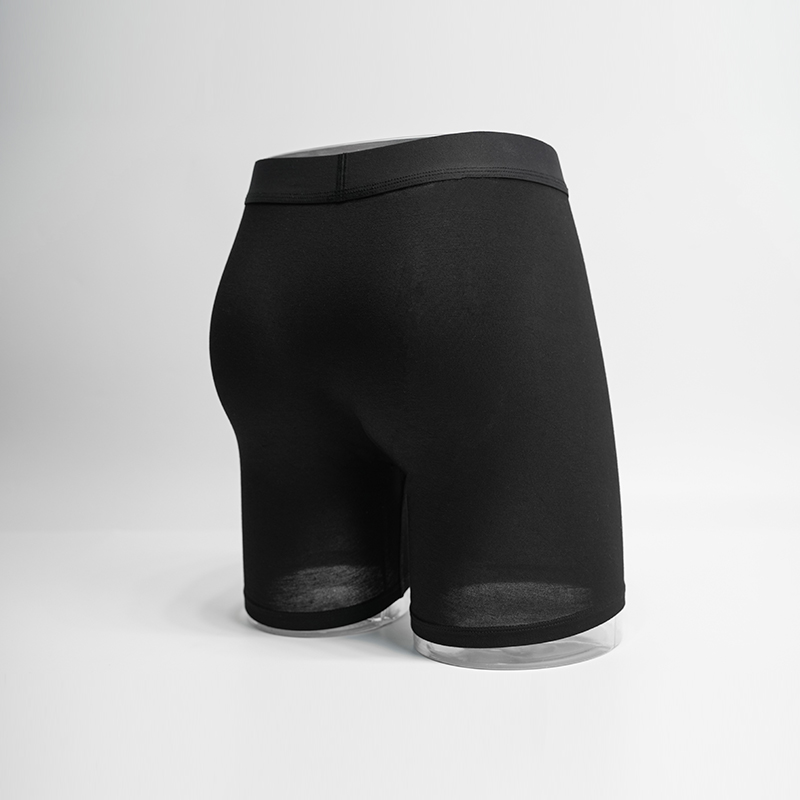 High-Support Men's Boxer Briefs for TrainingFour-needle six-thread stitching and high-tension bamboo jersey deliver the support, containment and ventilation needed for long, active days.View Product →
No single spec suits every wearer. The cards below map the situations buyers ask about most often to the construction that handles them.
Choose a longer leg and a higher spandex share. Both keep the cuffs from creeping up powerful thighs while walking or training.
A trunk-length cut sits flatter under slim trousers and avoids extra fabric bunching at the hem.
Lighter nylon-spandex blends and mesh ventilation panels move heat and moisture away from the skin.
A snug fit with a contoured pouch holds everything in place through repeated movement and cuts friction.
For hot climates in particular, mesh-panel construction is the spec we recommend most often:
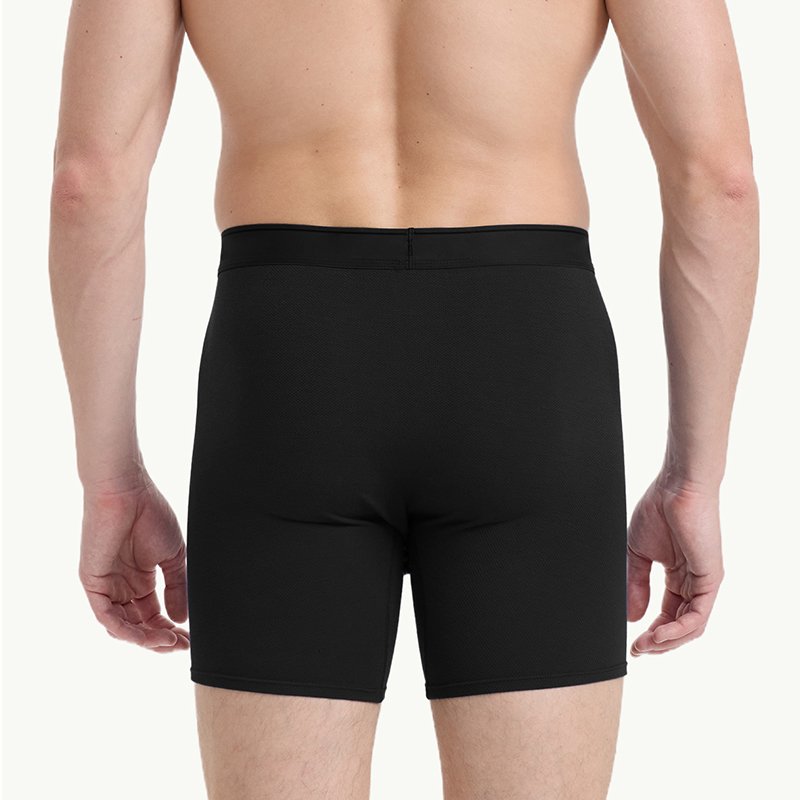 Mesh Cooling Men's Boxer Briefs for Hot ClimatesA bamboo-blend pair with mesh-panel construction offering 4.5x cotton breathability, a practical spec for buyers sourcing for warmer markets.View Product →
Most men's programs need two or three boxer brief builds, each with a clear job. If you are planning a range, this is how we usually split it, and where each of our current styles fits.
| Role in the range | Spec to lead with | Product to review |
| Everyday comfort | Bamboo viscose with balanced spandex, flat seams, tagless waistband | Bamboo Men's Boxer Briefs with Balanced Stretch |
| Training and active days | Four-needle six-thread stitching, high-tension jersey, contoured support | High-Support Men's Boxer Briefs for Training |
| Hot and humid markets | Bamboo blend with mesh ventilation panels | Mesh Cooling Men's Boxer Briefs for Hot Climates |
None of these have to be taken as they are. Fabric blend, leg length, waistband and color can all be adjusted to your target customer, and the samples are the fastest way to test the changes.
For brands, importers and retail groups, the details that make a pair comfortable are the same ones that belong on a specification sheet. Check these five before you sign off on bulk.
Each of these points is covered in more detail in our men's boxer briefs sourcing guide.
Whether you are launching your first underwear line or adding a new boxer brief to an existing one, development goes faster when the brief is clear. You do not need a finished tech pack to start. A reference pair, a competitor sample or a rough description of the customer is enough for our team to suggest a fabric, a construction and a first round of samples.
Brands planning a private-label program can review our OEM and ODM underwear manufacturing service before requesting counter samples. If one of the three styles above is close to what you need, send us the product name and the changes you want, and we will quote from there.
Mid-thigh is the practical standard. It is long enough to shield the inner thigh from friction and short enough to avoid bunching under trousers. Long-leg cuts exist for anti-chafing needs and for taller frames.
Fine-knit blends with a smooth surface, such as bamboo viscose, are a common choice because they feel soft and hold less moisture against the skin. Flat seams and a tagless waistband matter just as much as the fiber.
Most classic cotton and bamboo viscose blends sit between five and eight percent. That is enough recovery to hold the shape without a rubbery hand feel. Sports styles sometimes run slightly higher.
The cause is usually a mismatch between leg length, hem tension and fabric recovery. A longer cut, a higher spandex share and a hem engineered to sit flat against the thigh solve it in most cases.
Both are close-fitting, but boxer briefs have a longer leg that reaches mid-thigh, while trunks have a short, square-cut leg. Boxer briefs protect more against chafing, and trunks sit flatter under slim trousers.
A reference pair or photos, your preferred fabric and leg length, your size chart if you have one, and a rough order quantity and price range. With that, we can recommend a construction and send samples for you to test.

Copyright © Nantong Tianhong Textile Technology Co., Ltd. All Rights Reserved.
 Room 806, Building D, Jingyang Plaza, Chongchuan District, Nantong City, Jiangsu Province,china
 English
 Español
 русский
 عربى
عربى