Content
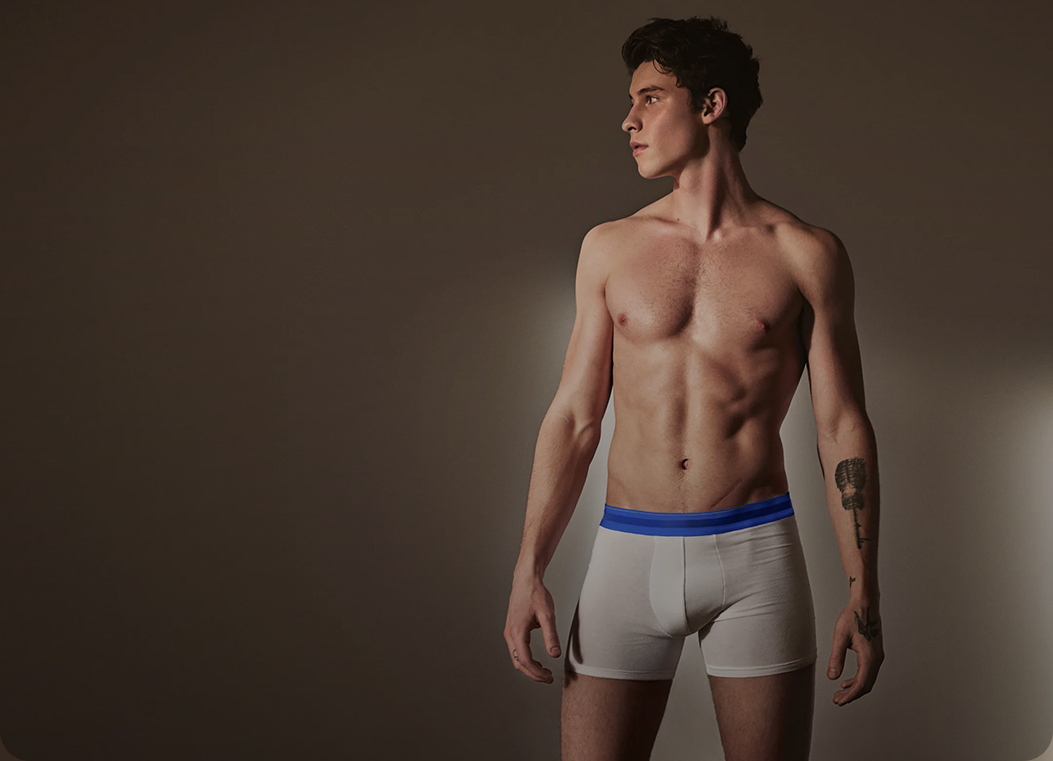
Modal boxer briefs are worth buying when you value a smooth, moisture-absorbent fabric for daily comfort, but there are five things worth checking first: fiber blend percentage, spandex content, brand-specific sizing, wash care requirements, and whether your intended use favors comfort over rugged durability. Getting these five details right before purchase is what separates a good modal experience from a disappointing one.
Modal starts as beech tree pulp, which is dissolved and spun into fiber. This puts it in a middle category: not fully natural like cotton, not fully synthetic like polyester. Industry sources classify it as a regenerated cellulose fiber, in the same family as viscose rayon and lyocell.
The wet-spinning process used to make modal produces an unusually fine, smooth filament. That is the direct reason modal underwear feels different in the hand than cotton before you even try it on - the fiber itself is structurally smoother.
Look for 90 percent or higher modal content on the label. Blends with less modal will feel closer to standard cotton and lose the signature smooth hand feel.
Pure modal has almost no stretch recovery on its own. A 5 to 8 percent spandex addition is what keeps the waistband and leg openings from sagging after a few washes.
Modal's stretch behaves differently across brands. Sizing that works in one label's cotton line will not automatically translate to their modal line.
Modal is more heat-sensitive than cotton. Confirm the recommended water temperature and drying method before the first wash, not after.
Daily office wear suits modal well. Heavy labor or high-friction sport use will wear modal down faster than a cotton-spandex or microfiber alternative.
Buyers rarely choose modal in isolation - the real decision is usually modal versus cotton, or modal versus bamboo viscose, which is its closest cousin.
Understanding how the fabric ages helps set realistic expectations at the point of purchase.
Fabric softens further and colors typically stay stable, since modal absorbs dye well during manufacturing.
With cool-water washing and low-heat drying, shape and stretch recovery remain close to original. Hot-water or high-heat drying at this stage is the most common cause of early sagging.
Light pilling may appear on higher-friction areas such as the inner thigh, more so than with cotton or microfiber. This is a known trait of modal fiber rather than a sign of a defective product.
Waistband elasticity is usually the first component to noticeably loosen, at which point replacement is generally more practical than continued wear.
| Priority | Better Fit |
| Softest possible feel against skin | Modal |
| Sensitive or easily irritated skin | Modal |
| Heavy manual labor or rough daily wear | Cotton-spandex |
| High-intensity sport or exercise | Microfiber blend |
| Low-maintenance, forgiving wash care | Cotton |
Modal generally offers a smoother feel and higher moisture absorption, while cotton holds up better under abrasion, so the better fabric depends on whether comfort or ruggedness matters more to you.
Shrinkage is minimal when washed in cool water and dried on low heat. Hot water and high-heat drying are the main causes of shrinkage in modal blends.
Modal's individual fibers are softer than cotton's, which gives it that smooth feel but also makes it somewhat more prone to surface pilling in high-friction areas over time.
Most well-performing modal boxer briefs use 5 to 8 percent spandex or elastane alongside 90 percent or higher modal content.
Yes, modal's high moisture absorption helps keep skin feeling drier in warm or humid conditions compared to less absorbent synthetic fabrics.
Low-heat tumble drying is generally fine, but air drying is preferred since high heat is the leading cause of early fiber breakdown in modal fabric.

Copyright © Nantong Tianhong Textile Technology Co., Ltd. All Rights Reserved.
 Room 806, Building D, Jingyang Plaza, Chongchuan District, Nantong City, Jiangsu Province,china

 English
 Español
 русский
 عربى
عربى