Content
Men's underwear is one of the most purchased apparel categories globally — yet most men make the choice on autopilot, defaulting to whatever style they wore first or whatever comes in a multipack at the lowest price. The result is often underwear that bunches under tailored trousers, rides up at the gym, or simply feels wrong by 3pm.
Three styles dominate the market: briefs, boxers, and trunks. Each has a distinct design philosophy, a different set of functional advantages, and a different set of situations where it fails. The confusion arises because all three look superficially similar on a shelf and are often marketed interchangeably.
This guide cuts through the overlap. We compare all three across fit, comfort, breathability, support, and real-world use scenarios — so you can make a deliberate choice rather than a default one.
Briefs are close-fitting underwear with no leg extension. The waistband sits at the natural waist or hip, and the leg openings are cut high — typically at the upper thigh or hip crease. The original modern men's underwear design, introduced in 1935.
Very close to the body throughout. No excess fabric. The leg openings sit against the skin, which means zero coverage of the inner thigh.
Maximum support with minimum fabric. Preferred for high-intensity sport, under slim tailored clothing, and by men who prioritize structural support above all else.
Boxers are loose, relaxed-cut underwear modeled after boxing shorts. They feature wide legs that sit at mid-thigh or above, with a relaxed seat. The waistband is typically wider and sits at or slightly above the hip.
Loose and relaxed throughout. The garment sits away from the body rather than against it, creating airspace around the legs and seat.
Maximum breathability and freedom of movement in a relaxed setting. Best suited for home wear, sleep, and low-activity days. Poorly suited to active use or fitted outerwear.
Trunks are a fitted, square-cut style with a short leg that typically extends 1–3 inches below the hip. They combine the support structure of a brief with a short leg panel — creating a distinct hybrid that is neither a brief nor a boxer brief.
Close-fitting at the seat and hip, with a short leg panel that covers the upper inner thigh. The square leg hem creates a clean, horizontal line unlike the curved leg opening of a brief.
The most versatile everyday style. Combines adequate support with inner thigh coverage and a compact profile that works under both fitted and casual clothing.
Briefs cover the seat and front only — the leg crease is the boundary. Boxers cover the full upper thigh, extending to mid-thigh on both sides with loose fabric. Trunks cover the upper inner thigh with a fitted panel — more than briefs, less than boxers, but unlike either: the coverage is close-fit rather than loose.
Measured from the waistband to the leg hem: Briefs end at approximately the hip crease (0 inch inseam). Trunks have a 1–3 inch inseam. Boxers extend to 4–6 inches. This length difference is the single most practically significant design variable — it determines what the garment does under trousers and during movement.
Briefs use a curved, high-cut leg opening with elastic. Boxers use a wide, open leg hem — often unhemmed on woven styles. Trunks use a flat, square-cut leg band with a horizontal elastic hem. The trunk's flat leg band is its most structurally distinctive feature — it applies even, distributed pressure to the thigh without the pinching risk of a narrow brief elastic.
Viewed from the front: briefs form a V-shape at the leg. Boxers create a rectangular, short-shorts silhouette. Trunks form a clean square — the visual middle ground that modern underwear design has converged on as a default starting point for new product lines. The trunk silhouette photographs cleanly and is the most widely used in contemporary men's underwear marketing.
Comfort is subjective — but the variables that influence it are measurable. Here is how the three styles compare across each comfort dimension.
| Comfort Factor | Briefs | Boxers | Trunks |
| 4.1 Tightness vs Looseness | Tight — close fit throughout, no loose fabric anywhere | Loose — fabric sits away from body, maximum air gap | Fitted — close at seat and hip, short leg panel sits against thigh |
| 4.2 Breathability | Moderate — close fit traps some heat at the body | Highest — loose fabric creates constant airflow around legs | Good — fitted but short leg means less fabric surface area to trap heat |
| 4.3 Softness & Skin Feel | Dependent on fabric — elastic leg opening can cause irritation on some skin types | Generally soft — woven cotton is gentle, but seams can shift against skin | Typically very smooth — flat leg band and stretch jersey minimize skin contact points |
| 4.4 Movement Freedom | High — minimal fabric means no restriction, but inner thigh exposure during movement | Maximum — completely unrestricted leg movement | High — stretch fabric and short leg allow full range of motion without fabric binding |
| Extended Wear | Good for support; leg elastic can dig in after long periods for some builds | Good for relaxed settings; poor for active or long walking scenarios | Strong performer — flat leg band and fitted stretch fabric maintain consistent comfort across full day |
Support is primarily determined by how closely the fabric wraps around the body — briefs win by design. Trunks deliver strong support through the close-fit seat and hip construction; the short leg adds stability without the full compression of a brief's high-cut leg.
Stability during movement — staying in position rather than shifting or bunching — correlates with how closely the garment fits. Loose boxers shift significantly during walking and physical activity. Trunks with a well-engineered flat leg band stay in position consistently across movement ranges.
Trunks sit flat under tailored trousers, prevent inner thigh irritation during extended sitting, and don't shift during walking between meetings. Briefs also work well; boxers bunch under fitted trousers.
Briefs offer maximum structural support with no excess fabric to shift during explosive movement. Trunks are a close second for gym training; boxers provide inadequate support for anything above light activity.
The inner thigh coverage of trunks prevents chafing during sustained running or cycling better than briefs. For high-speed sport, performance briefs with a contoured pouch remain the specialist choice.
The trunk's combination of support, inner thigh coverage, and compact profile makes it the strongest all-day everyday performer. Works from morning commute through gym session to evening out without needing to change. Briefs are a strong alternative for men who prefer maximum support and don't experience inner thigh irritation.
For contact sports and high-intensity training, performance briefs with a contoured pouch deliver unmatched support. For gym training, cycling, and moderate activity where chafe prevention matters as much as support, trunks are the better choice. Avoid boxers for any sustained physical activity — the loose fabric creates friction and provides no structural support.
For lounging at home and sleeping, boxers deliver what they promise: maximum airflow, unrestricted movement, and a relaxed fit that never feels constricting. There is no need for support or under-clothing performance in a sleep context — breathability and comfort are the only criteria, and loose woven cotton boxers win on both.
Long periods of sitting create specific demands: the underwear must stay in position without shifting, must not create pressure at the leg elastic, and must sit flat under fitted trousers. Trunks meet all three criteria. The flat leg band distributes pressure evenly; the compact profile lies smooth under tailored fabrics; the fitted construction doesn't bunch between the legs when seated.
Lean or athletic build: Trunks are generally most flattering — the short square leg creates proportion by making the legs appear longer relative to the torso. Briefs also work well for athletic builds.
Broader hips or fuller thighs: Boxer briefs or trunks with a slightly longer inseam provide more coverage and reduce pressure at the leg hem. Avoid briefs with narrow leg elastics if you have fuller thighs — the elastic can dig in.
Taller builds with longer torso: Mid-rise or high-rise trunks or boxer briefs provide better proportional coverage. Low-rise trunks can look and feel too brief-like on a tall frame.
Shorter builds: Low-rise trunks visually lengthen the leg line. Avoid mid-thigh boxer briefs — the longer leg can cut the visual leg line and make legs appear shorter.
Highly active / daily sport: Briefs for maximum support during intense training; trunks in moisture-wicking fabric for gym and moderate activity. Avoid woven boxers entirely for active use.
Office-based / mostly seated: Trunks. The flat leg band and fitted construction maintain comfort and position across extended seated periods better than briefs (which can dig in at the leg crease) or boxers (which bunch).
Mixed day: Trunks in a stretch jersey fabric handle the widest range of transitions — from a morning run to a long work day to an evening out — without needing to change.
Slim or tailored trousers / suits: Trunks or briefs. The compact profile sits flat with no fabric bunching at the thigh. Boxers are incompatible with fitted trousers.
Loose or relaxed trousers, shorts: All three work. Boxers are a comfortable choice for casual, loose-fit clothing. The constraint is removed when outerwear is relaxed.
Jeans (fitted): Trunks. The short leg sits below the jeans' leg without creating visible bunching at the upper thigh.
Swimwear: Trunks can double as light swimwear in a pinch. Briefs sit invisibly under most swimwear. Boxers are visible and absorb water — avoid.
You want to feel nothing: Trunks in soft modal or micro-modal spandex — the fitted stretch fabric and minimal seam structure produce a "barely there" sensation that briefs' elastic leg openings and boxers' shifting fabric don't match.
You want maximum airflow: Woven cotton boxers are unbeatable in still-air conditions. If you run warm and prioritize ventilation above all else, boxers remain the strongest choice for non-active settings.
You want maximum support: Briefs — preferably with a contoured or structured pouch. No other style delivers the same level of structural support per unit of fabric.
You want one style for everything: Trunks. No other single underwear style handles the full range of daily scenarios without a significant compromise.
The style determines the structure. The fabric determines how that structure feels against your skin. Two trunks in different fabrics can feel completely different despite identical construction — fabric choice is the second most important variable after cut.
The benchmark fabric for everyday underwear. Soft, absorbent, and skin-friendly. Organic cotton eliminates synthetic pesticide residues. Cotton spandex blends (90/10 or 95/5) are the most widely used construction in trunks and briefs for good reason — reliable performance across all normal use scenarios.
Beechwood-derived semi-synthetic fiber. Significantly softer than standard cotton — the hand feel is closer to silk. Modal absorbs moisture well and releases it quickly, making it a strong all-day comfort choice. Resists shrinking and color fading better than cotton through repeated washing.
Fast moisture-wicking and quick-dry — the technical performance leader. rPET (made from post-consumer plastic bottles) delivers the same performance as virgin polyester with a lower environmental footprint when GRS-certified. Less naturally breathable than cotton in still-air conditions, but superior in active/sweating contexts.
The smoothest synthetic option. Nylon spandex sits against skin without any texture, making it particularly suitable for fitted styles where fabric feel is a priority. Highly resistant to abrasion — nylon trunks typically outlast cotton equivalents through more wash cycles. Slightly less breathable than natural fibers but excellent shape retention.
A style that looks good on a model in a studio may perform completely differently on your body in your daily routine. Photogenic proportions do not translate to functional performance. Always evaluate based on use case and body type, not marketing imagery.
Men who choose boxers because they feel comfortable at home and then wear them to the gym are using the wrong tool. Similarly, men who wear high-compression performance briefs to the office for 8 hours of sitting often find the leg elastic uncomfortable by afternoon. Match the style to the primary activity of the day.
Underwear sizing varies significantly between brands, particularly for trunks where both waist measurement and hip/thigh circumference matter. Too small: elastic cuts in, seams create pressure marks. Too large: the garment shifts, bunches, and fails to provide support. Always size to your actual waist measurement and check the brand's specific size chart — generic S/M/L labels are unreliable.
A common misconception is that tighter = more supportive. A well-engineered trunk or brief provides support through construction — the fabric cut, panel geometry, and spandex ratio — not through being oversized in compression. Underwear that feels uncomfortably tight is not providing superior support; it is simply the wrong size or the wrong construction for your body.
The same trunk in cotton spandex vs recycled polyester spandex will feel, breathe, and perform significantly differently. Two trunks at identical price points can differ dramatically in actual wear quality based solely on fabric. Pay attention to fabric composition — it is at least as important as the cut.
Consumer preference data in this category is fragmented — robust, publicly available studies are limited. What multiple independent consumer surveys and Google Trends data consistently indicate as of 2025–2026:
A 2025 TBô survey of 505 respondents found trunks at 19% preference share — second only to briefs at 22% and ahead of boxer briefs at 17%. When trunks and boxer briefs are combined as "fitted hybrid" styles, that group leads briefs. Google Trends data for "men's trunks" shows consistent year-on-year search growth from 2022 through mid-2026.
Organic cotton and recycled materials (rPET, recycled nylon) are growing segments within men's underwear. Brands incorporating GRS-certified recycled fabrics and GOTS-certified organic cotton report higher engagement from consumers aged 25–40, particularly in European and North American markets.
The normalization of performance fabrics in casual clothing has carried over to underwear. Moisture-wicking and quick-dry fabrics, previously positioned as "sport" features, are now standard expectations in everyday trunk and brief collections — not premium add-ons.
Consumer reviews consistently cite ride-up as the top underwear complaint across styles. Brands that engineer the leg band construction to eliminate ride-up — rather than relying on compression alone — are differentiating successfully. This is increasingly a baseline expectation rather than a premium feature.
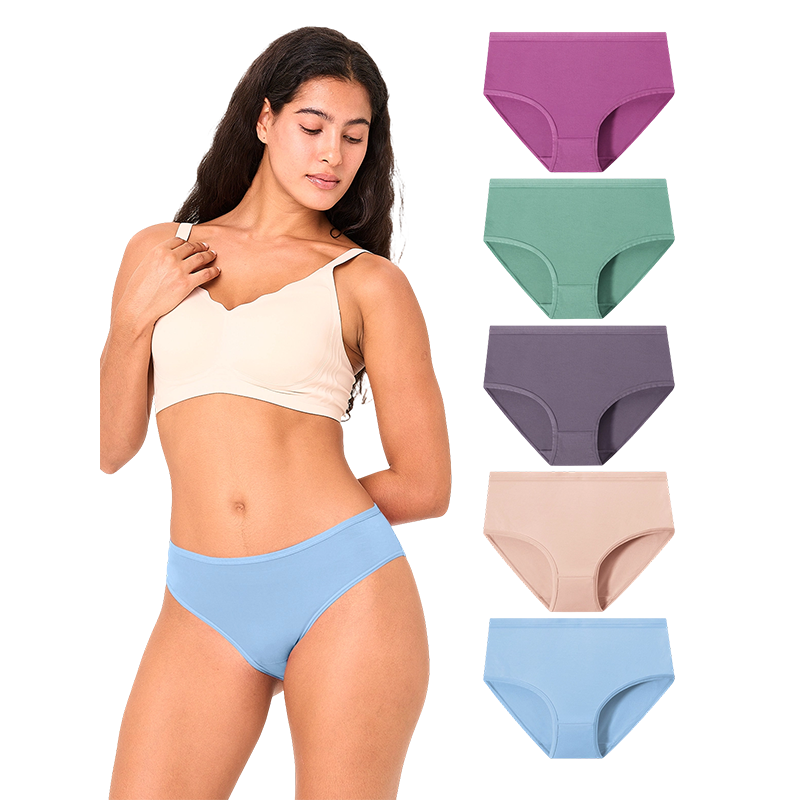
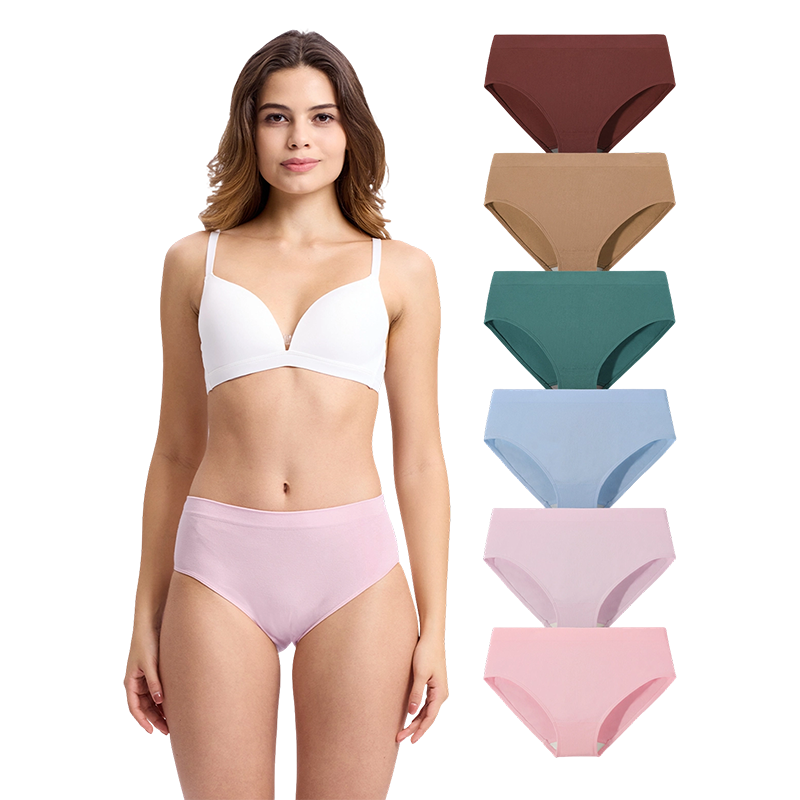
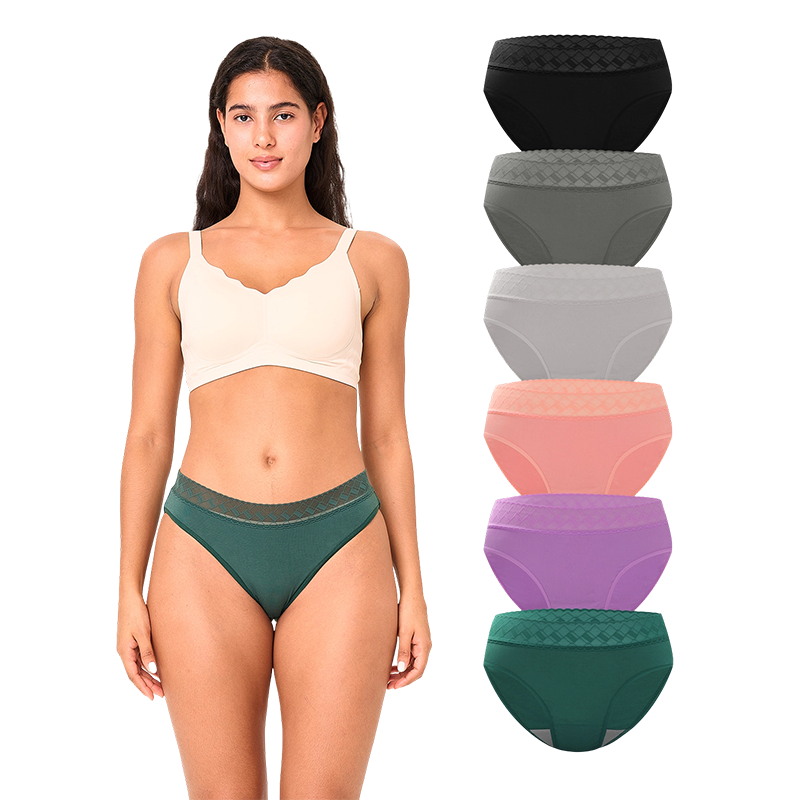
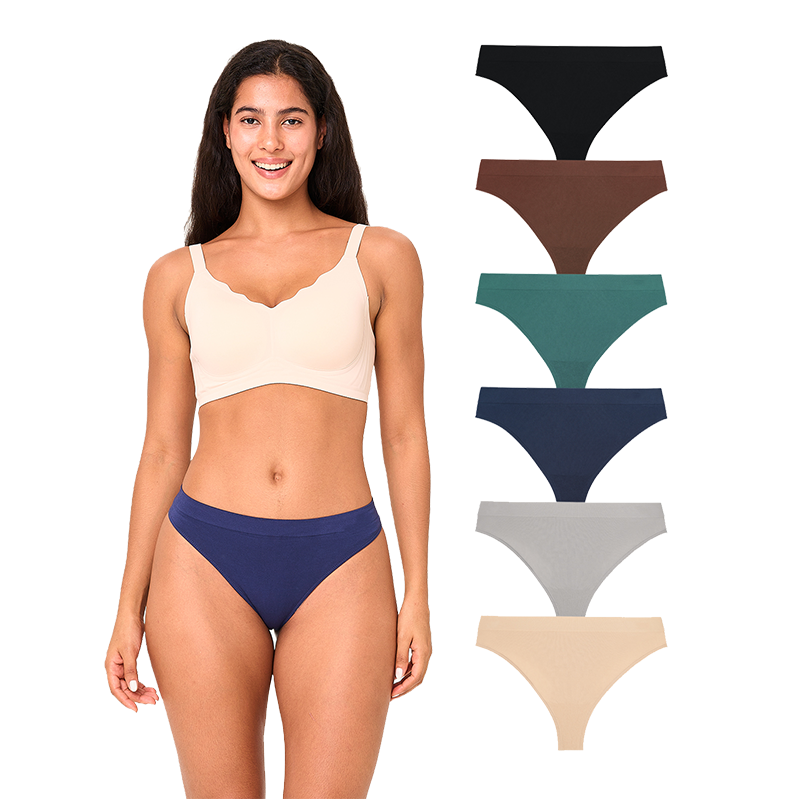
We manufacture men's trunks across functional everyday, fashion, and no-ride-up constructions. Full OEM and ODM capability with certification support.
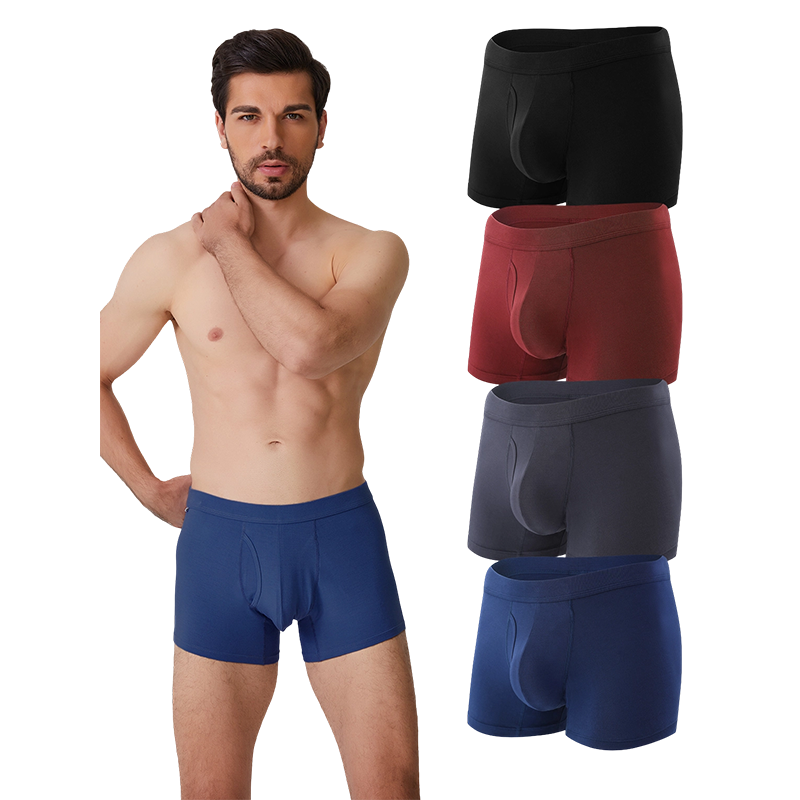
Engineered flat leg band eliminates ride-up through a full day of movement — the key functional complaint this construction directly addresses.
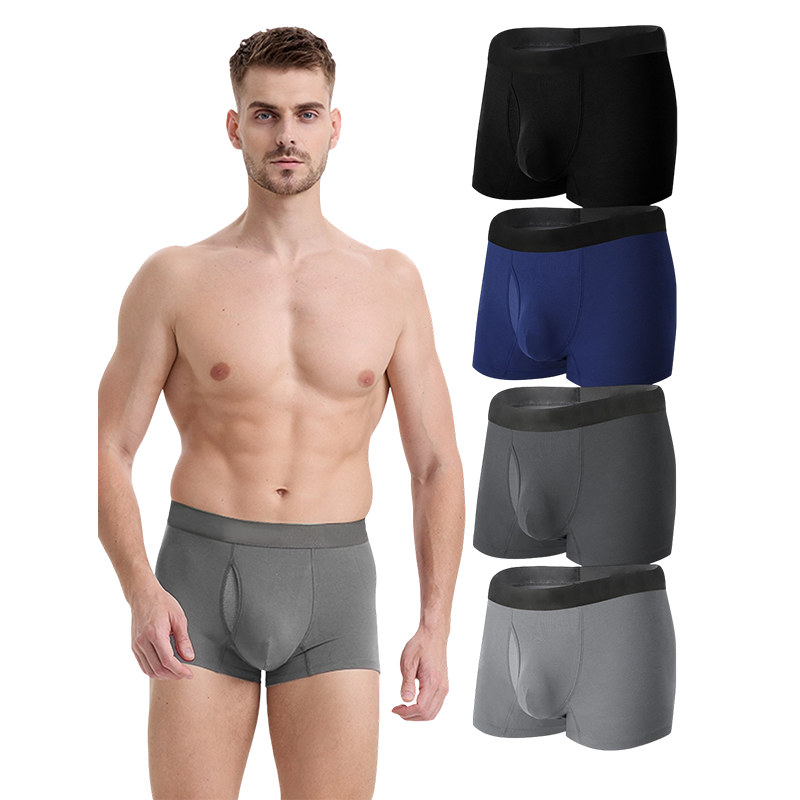
Square-cut trunk in stretch jersey. Clean construction suitable for private label basics programs and multipack formats.
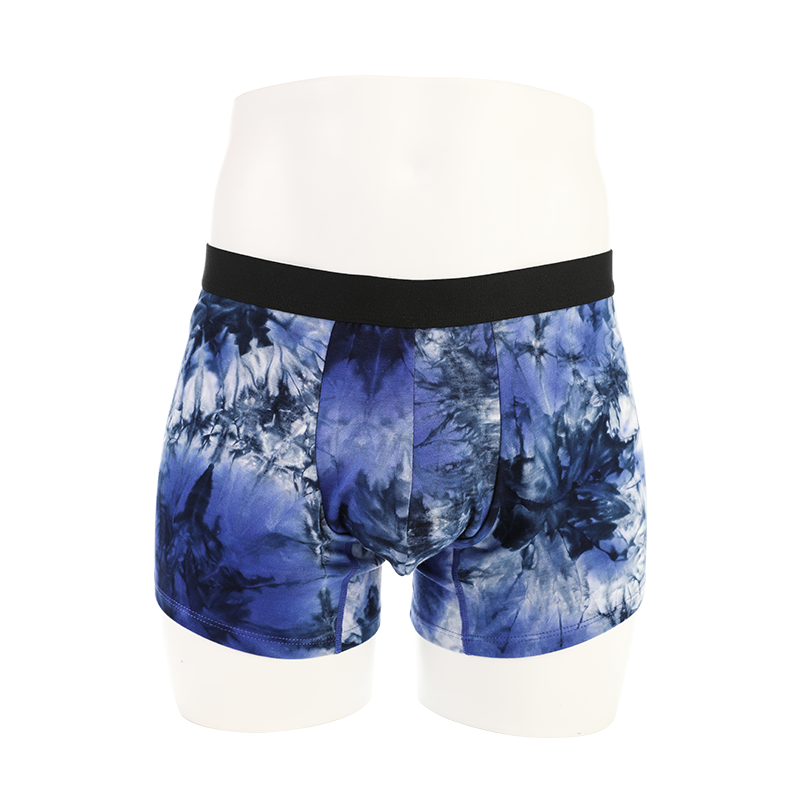
Tie-dye pattern on fitted trunk base — designed for fashion-forward underwear collections targeting 18–35 demographics.
There is no single best style. Each of the three serves a different primary purpose: briefs for maximum support, boxers for maximum breathability in relaxed settings, trunks for versatility across the widest range of daily scenarios.
The practical framework: if you need one style that handles most of your day most of the time, trunks are the strongest candidate — they compromise least across the variables that matter to most men. If your day is split between intense exercise and relaxed downtime, a combination of performance briefs (active) and loose boxers (home/sleep) may serve better than any single style. If support is the non-negotiable priority above all else, briefs remain unmatched.
The secondary variable — fabric — can change the performance of any style dramatically. A well-made trunk in organic cotton spandex and a poorly made trunk in low-grade polyester are not comparable products despite sharing a style name. Pay attention to fabric composition and construction quality, not just cut.

Copyright © Nantong Tianhong Textile Technology Co., Ltd. All Rights Reserved.
 Room 806, Building D, Jingyang Plaza, Chongchuan District, Nantong City, Jiangsu Province,china
 English
 Español
 русский
 عربى
عربى