Content
If you have ever finished a long run or a day at the office with red marks on your hips or a wedgie that needed constant adjustment, you already understand the problem with traditional stitched underwear. The side seams dig in, the rear center seam rubs, and the waistband folds over. These aren't minor annoyances; they are the result of a construction method that relies on cutting fabric panels and sewing them together. Men's seamless underwear removes those failure points entirely by knitting the garment as a single, continuous tube. This guide explains how that process works, which fabrics perform best, how to choose the right style for your body, and what to look for if you are sourcing garments for a brand.
Seamless underwear is not simply a regular pair of briefs with the stitching hidden or made flatter. It is a fundamentally different construction. The garment is knitted on a circular knitting machine as one continuous piece, with the waistband, body, and leg openings formed in a single pass. This means there is no side seam running down your hip, no rear center seam, and no separate crotch panel that has to be sewn in place. The result is a structure that moves with your body rather than against it.
Yarns are fed into a circular weft knitting machine programmed to produce a finished garment shape.
The machine knits the waistband first, then transitions into the body of the brief.
Leg openings are knitted last, and the garment is bound off as one continuous piece.
Because the machine is computer-controlled, it can vary stitch density and knit patterns across the garment. This allows the manufacturer to build in different levels of support, ventilation zones, and compression without adding a single seam. Advances in this technology mean that a modern seamless machine can produce a trunk with a U-shaped front opening or a brief with a reinforced pouch, all in one piece.
To understand the real differences, it helps to look at the two constructions across the criteria that matter most for daily wear.
| Comparison Point | Seamless Construction | Traditional Stitched Construction |
| Chafing & Friction | No side or rear seams to irritate skin | Seams create friction points, especially during movement |
| Ride-Up & Roll | Knitted-in structure resists curling at leg and waist edges | Elastic bands can roll over, especially after washing |
| Elasticity Retention | Continuous knit distributes stretch evenly | Stretch concentrated at sewn seams, which can fail first |
| Durability | No seam thread to break or unravel | Seam threads and stitch integrity are weak points over time |
| Moisture Management | Zoned knitting allows targeted ventilation | Moisture wicking depends mostly on fabric, not structure |
The distinction matters because a seamless garment addresses the mechanical reasons underwear becomes uncomfortable. When you sit, stand, and walk, a stitched garment has fixed seam lines that pull against the skin. A seamless garment stretches and recovers as one unit, which is why it feels less restrictive and stays in place better.
The shift toward seamless styles is backed by measurable comfort gains, not just marketing. We have covered the main advantages of seamless underwear in detail elsewhere, but the practical benefits for men come down to three areas: friction reduction, moisture control, and a clean silhouette.
Men with athletic builds or larger thighs often report chafing along the inner thigh and at the leg openings of boxer briefs. In a seamless design, the leg band is knitted directly into the garment, so there is no bulky elastic edge that digs in. The knit structure can also be engineered with a denser stitch pattern at the leg bands to hold them in place without rolling. A well-constructed seamless trunk stays put because the entire lower body of the garment moves with your legs rather than sliding against them.
Nylon and spandex blends dominate seamless manufacturing because these synthetic fibers dry quickly and do not absorb sweat the way cotton does. Seamless knitting allows mesh zones to be created in high-heat areas without adding fabric layers or seams. Strategic ventilation around the crotch and lower back keeps you cooler during a commute, a gym session, or a long day of physical activity.
If you wear dress trousers or slim-fit chinos, visible panty lines are not just a women's issue. Stitched undergarments create ridges under tailored fabrics. The seamless construction is naturally smooth under clothing because there are no sewn seams or thick elastic bands to telegraph through the outer layer, keeping the front of your trousers clean and lines-free.
After a few washes, the fabric composition becomes more important than the initial feel. Understanding how different fibers interact tells you how long a garment will keep its shape and whether it will hold up to the demands of daily wear.
Typically, seamless men's underwear uses a blend of around 80% nylon and 20% spandex. Sometimes the ratios shift to 75/25 or 85/15 depending on the desired compression level. Nylon provides durability, a smooth hand-feel, and excellent moisture-wicking properties. Spandex powers the recovery: the ability of the fabric to snap back to its original shape after being stretched. If the spandex content is too low, the garment bags out at the knees and waist. If it is too high, the fit can become overly tight and trap heat. A well-balanced blend supports your muscles lightly without feeling like compression gear.
Brands looking to improve their environmental footprint are increasingly asking for recycled materials. Recycled spandex is made from pre-consumer or post-industrial waste, and it performs very close to virgin spandex in terms of elasticity, an important factor for underwear. For that reason, we offer a line of recycled spandex seamless trunks that maintain the same support and shape retention as conventional spandex while supporting a lower-impact supply chain. Buyers should ask factories for documentation about the recycled content, as the ability to trace recycled yarns to certified sources is increasingly a requirement for retail partnerships in the United States and Europe.
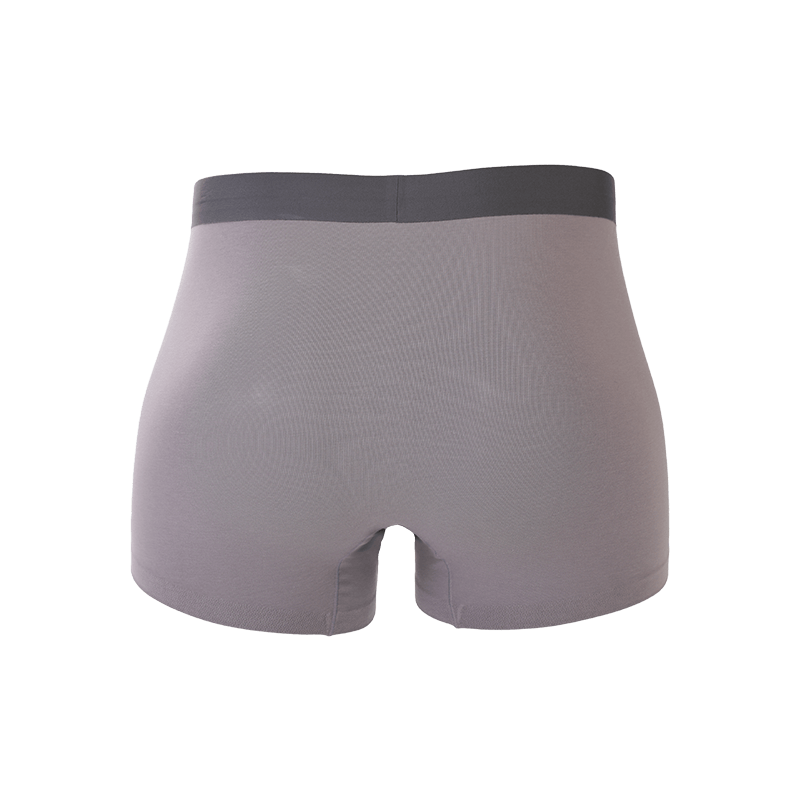 Wholesale Recycled Spandex Trunk Suppliers, OEM/ODM Company - Nantong Tianhong TNantong Tianhong Textile Technology Co., Ltd is a China custom Recycled Spandex Trunk supplier and company, We specialize in wholesale Re...View Product →
Pure cotton is rarely used for seamless knitting. Cotton lacks the natural elasticity required to hold the garment shape on a seamless machine, and it absorbs moisture rather than wicking it. Bamboo viscose, on the other hand, has gained popularity in stitched underwear. However, it is also problematic for seamless construction. Bamboo is generally blended with spandex in a yarn that can be used on circular knitting machines, but it offers less recovery than nylon. Some manufacturers create a short bamboo knit that feels soft initially but loses its elasticity faster than nylon. Cotton and bamboo have their place in loungewear, but for innerwear, nylon-spandex blends remain the most reliable choice.
Within the seamless category, you have a few distinct cuts to choose from, and each suits a slightly different body type and use case.
Trunks are the most versatile seamless style. They have a shorter leg than boxer briefs and a lower rise than classic briefs. Their design makes them effective at preventing leg-band ride-up while still looking modern. For men who cycle through both daily office wear and weekend workouts, trunks are the style that works in both situations. Our seamless trunk underwear provides good coverage without the bulk of a longer leg, making it a solid first seamless purchase.
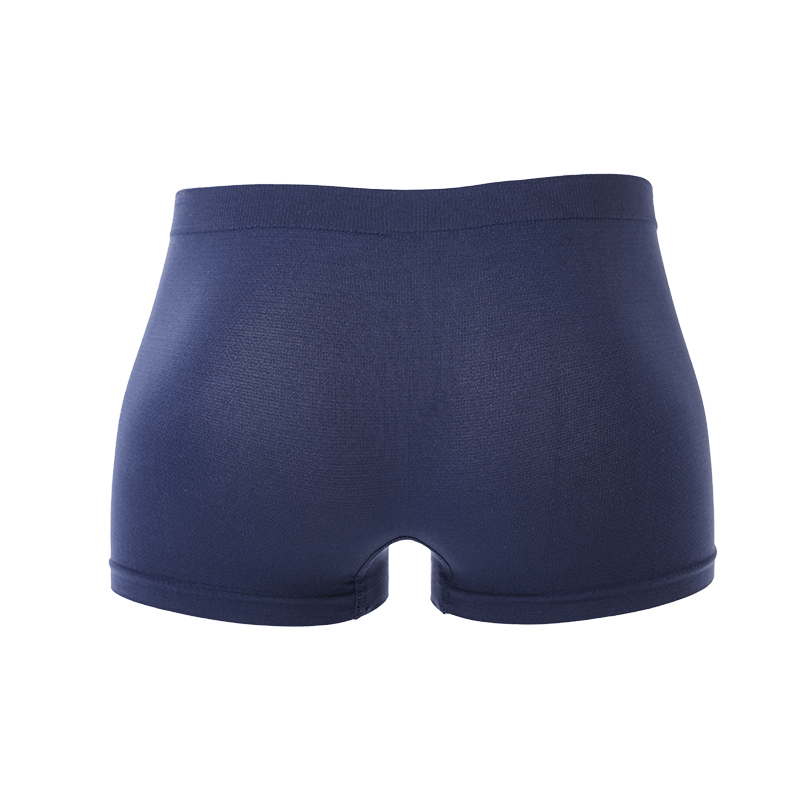 Wholesale Seamless Trunk Underwear Suppliers, OEM/ODM Company - Nantong TianhongNantong Tianhong Textile Technology Co., Ltd is a China custom Seamless Trunk Underwear supplier and company, We specialize in wholesale ...View Product →
Boxer briefs in a seamless form provide longer leg coverage, which is an advantage for men who experience friction between the thighs during running or walking long distances. The extended leg acts as a protective layer, and a seamless version of this style does that without adding a seam that can rub or roll. They are worth trying if you have a larger thigh circumference and find shorter styles ride up. Just be aware that longer legs may require you to size up for comfort.
Sizing varies across seamless garments because of the inherent stretch in the knit. However, fit issues are real. A common complaint from men with larger thighs is that they must size up from their usual waist size to avoid leg bands feeling tight. As a rule, measure your actual hip circumference at the widest point, and if your thighs are on the heavier side, consider sizing up from your waist measurement. Consider the men's seamless trunk, which is provided in a standard waist-range fit. If you prefer a tighter fit that provides visible support to the mid-section and glutes, stick with your normal size. If you prioritize freedom of movement in the legs, choose the next size up. Seamless fabric is designed to stretch, but stretching a smaller size hard every day will accelerate fiber fatigue.
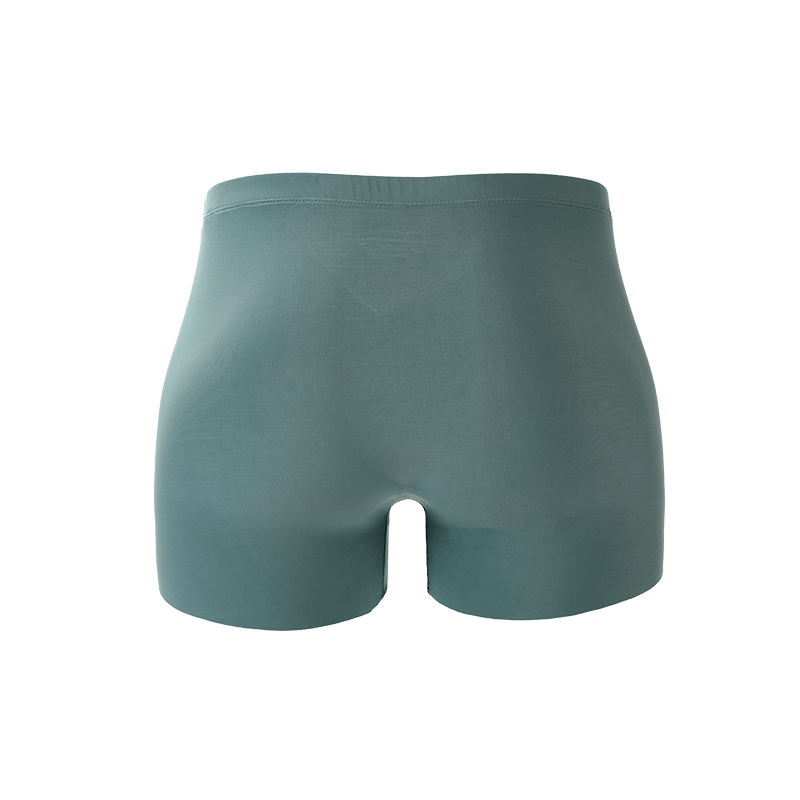 Wholesale Men's Seamless Trunk Suppliers, OEM/ODM Company - Nantong Tianhong TexNantong Tianhong Textile Technology Co., Ltd is a China custom Men's Seamless Trunk supplier and company, We specialize in wholesale Men'...View Product →
The most common reason seamless underwear fails early is laundering, not construction. Spandex consists of long-chain polymer molecules that begin to degrade under high heat and when exposed to fabric softeners.
Do
Avoid
Softener coats the fibers with a waxy residue that reduces elasticity over time and prevents moisture from evaporating. Heat breaks down spandex rapidly, which is why the dryer should be avoided. If you follow this routine, a good seamless pair will keep its shape for well over a year, whereas stitched underwear with the same fabric will often lose its waistband elasticity long before the body fabric wears out.
For a brand manager or procurement specialist, understanding the factory capabilities behind seamless underwear is more complex than sampling a product. It requires a look at machinery, quality control processes, and compliance with environmental standards.
The number of seamless machines directly impacts production capacity and lead times. You also want to verify whether the factory can perform additional processes, such as four-needle six-thread stitching for other garments or fine gauging for sizes. Ask to see the quality-control documentation for a recent production batch, including checks for fabric defects, stitching issues, and dimensional stability.
If you are importing seamless underwear into the United States or Europe, certifications are non-negotiable. The Oeko-Tex Standard 100 certification is the most recognized proof that the finished garment contains no harmful levels of substances. Depending on your target market, you may also require compliance with supply chain certifications, especially for retailers with sustainability mandates.
Seamless garments offer unique customization opportunities because the knitting machine can incorporate the logo or patterns into the fabric itself. You have choices in the base yarn composition, thread count, waistband height, and ventilation zone placement. A factory that does in-house dyeing offers shorter lead times and better color control.
At this point, if you are evaluating the wholesale potential of seamless underwear, the most important step is a factory audit. The fundamentals of fit, recovery, and durability stem from the machine settings and yarn quality, not just the fabric. When you are ready to move forward, review our OEM manufacturing services to understand the process from yarn sourcing to finished goods.
Leg bands on well-made seamless trunks are knitted tightly but they usually do not roll because they are one continuous piece with the garment. The waistband remains flat. The primary risk of ride-up comes from choosing a style that is too loose. If the garment has a snug but not restrictive fit, it stays in place.
Yes. The lack of seams reduces the risk of chafing on long runs or bike rides. The stretch and compression provide some muscle support. The key is selecting a lower-leg style like a trunk or brief that does not bunch under athletic shorts.
Seamless garments can last longer because there are no sewn seams to unravel. However, the fabric undergoes constant stretching while wearing. The issue is not the construction but the elasticity. Proper washing extends the life to around a year and a half of regular use.
Seamless allows engineered zones of ventilation, which an ordinary stitched garment cannot provide without extra fabric layers. A seamless nylon knit with mesh openings is more breathable than a stitched cotton knit.
Yes, if the fabric is made from a single type of polymer. When a garment is knitted from 100% nylon (even with elastane content), it is still possible to recycle it into industrial materials. Garments with blended bamboo or cotton are harder to recycle, which is why mono-material construction is a priority for sustainable brands.
The evidence from both construction and everyday fit points to a clear conclusion: seamless underwear is worth switching to. The absence of seams eliminates the friction that causes chafing and irritation. The engineering allows for targeted stretch and ventilation, so you get a level of performance that a stitched garment cannot match, even with the same fabric. The fit stays put because there are no separate elastic bands to roll and deform. For men who value a clean silhouette under professional clothing, the no-show advantage seals the deal.
For brands and retailers, the merits are equally clear. The market for seamless intimate apparel is growing because consumers have discovered the comfort difference and are willing to pay a premium for it. Sustainable options like recycled spandex give your label a credible environmental story, and innovations in knitting technology mean you can customize fit and function to your exact customer profile.
Men's seamless underwear is no longer a niche preference. It is the standard by which modern underwear is measured. If your first purchase was a stitched product, trying a seamless trunk will likely change your expectations for what that first layer of clothing can do for you every single day.

Copyright © Nantong Tianhong Textile Technology Co., Ltd. All Rights Reserved.
 Room 806, Building D, Jingyang Plaza, Chongchuan District, Nantong City, Jiangsu Province,china


 English
 Español
 русский
 عربى
عربى