Content
Yes, sports bras compress the chest when running, and that compression is not a side effect, it is the entire point of the design. Running creates repetitive, high-force impact with every stride, and a compression-style sports bra works by holding breast tissue firmly against the chest wall so it moves as one unit instead of bouncing independently. What matters for comfort and safety is not whether compression happens, but how evenly it is distributed and whether it crosses the line from firm support into something that restricts breathing or circulation.
The confusion around this question usually comes from the word compression itself. Compared to an everyday bra, which lifts and shapes each breast separately, a running bra is deliberately built to flatten and immobilize, and that can feel unfamiliar the first time someone wears one. Understanding the mechanics behind that feeling makes it much easier to tell normal, functional compression apart from a bra that simply does not fit.
Breast tissue is supported almost entirely by skin and ligaments, with very little internal muscle to hold it in place. During running, that tissue moves in three directions at once: vertically with each footstrike, side to side as the torso rotates, and slightly forward and back with stride rhythm. Running produces far more repetitive vertical force than walking or low-impact exercise, which is why bounce becomes noticeable so quickly once pace increases.
Left unsupported, this movement compounds with every stride over the course of a run, which is why discomfort tends to build rather than stay constant. A compression bra interrupts that cycle early by limiting how far the tissue can travel in the first place, rather than trying to catch and correct the movement after it has already started.
A compression bra does not work the way a shaped, underwired bra does. Instead of two separate cups holding each breast in a defined shape, the entire garment functions as a single stretch layer that presses tissue flat and holds it against the ribcage. This spreads restraining force across a wide area rather than concentrating it under two narrow cup edges, which is part of why compression bras can feel secure without feeling like they are gripping any one point.
The underband does most of the work in this system. A wide, stable band anchors the bra low on the ribcage so the fabric above it can stay taut through the full range of motion in a stride, instead of shifting upward and losing tension the way a narrow band tends to. Elastic recovery in the fabric matters just as much as the initial fit, since a fabric that keeps snapping back to shape maintains even compression mile after mile, while a fabric that loses recovery starts to compress unevenly as a run goes on.
Every compression bra should feel snug, that part is expected. The signal to watch for is not tightness itself, but where that tightness sits and what it does to breathing, circulation, and skin. The zones below outline how that progression typically looks, from supportive to restrictive.
Not every sports bra relies on compression as its main support strategy, and knowing which category a bra falls into explains a lot about how it will feel during a run.
| Construction | Support Method | Typical Fit | Best Suited For |
| Compression | Presses breast tissue flat against the chest as one unit | Snug, flattened silhouette, minimal separation | Smaller to medium busts, low to moderate impact running |
| Encapsulation | Molded or seamed cups support and separate each breast individually | More rounded shape, similar profile to an everyday bra | Larger busts, activities needing individual cup support |
| Combination | Molded cups worn underneath an outer compression layer | Structured shape with an added firm outer band | High-impact running, sprinting, interval training |
Impact level rises sharply between a recovery jog and a hard interval session, and the amount of compression a bra should provide rises with it. Using the same bra for every pace is one of the most common reasons a bra feels wrong on some days and fine on others.
Runners who train across multiple paces in the same week often benefit from owning bras from more than one category on the table above, rather than expecting a single bra to handle every session equally well.
Two bras built to the same compression level can feel completely different depending on what they are made from. Moisture-wicking fabric keeps sweat from soaking into the band and adding extra weight and drag against the skin, while strong elastic recovery is what keeps compression consistent from the first mile to the last instead of loosening halfway through a run. Flat, tag-free seams matter just as much, since a raised seam sitting directly under a compression band is one of the most common causes of chafing during longer runs.
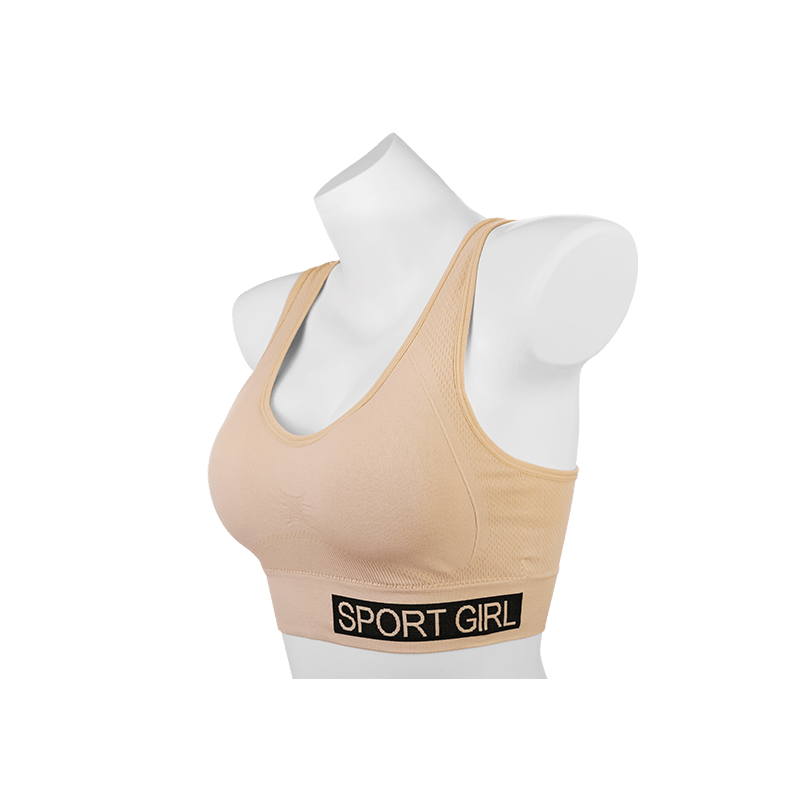
Built from advanced moisture-wicking fabric that manages perspiration efficiently, keeping the band dry and stable rather than heavy and slipping through a run. The breathable construction regulates temperature and reduces chafing at pressure points, while a tailored fit adds stability without limiting the runner's range of motion.
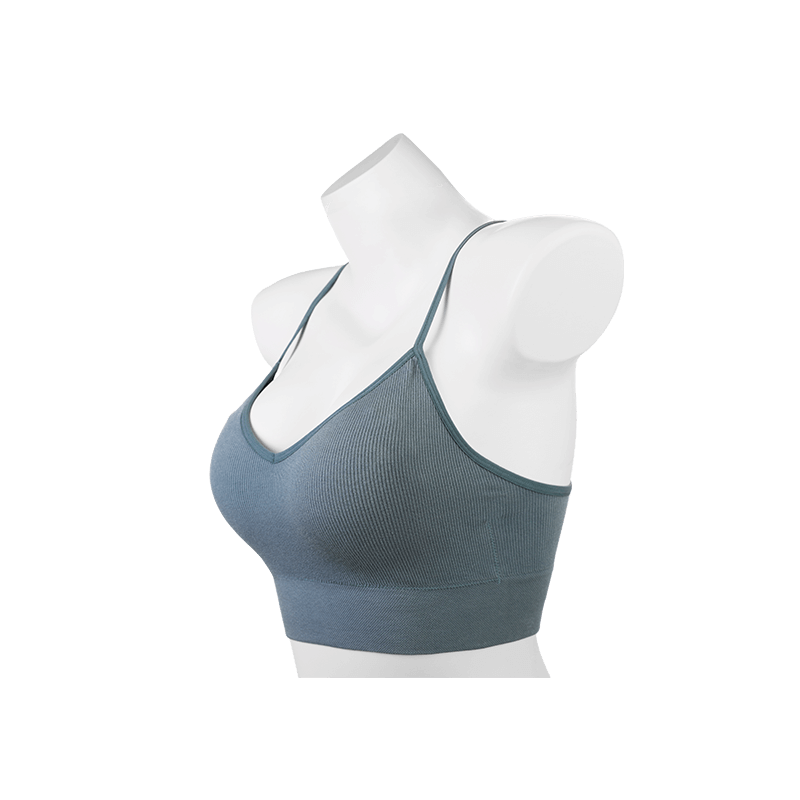
Constructed from a blend of durable nylon, breathable modal fiber, and flexible spandex. The nylon content holds its shape through repeated wear and washing, which keeps compression from drifting over the life of the bra, while the modal fiber adds a soft, next-to-skin feel that stays comfortable through long training blocks.
Most complaints about a sports bra feeling too compressive actually trace back to sizing rather than the bra's design. These habits are worth checking before assuming a bra style itself is the problem.
Nantong Tianhong Textile Technology Co., Ltd., (BAMSILK™) founded in 2001 and dedicated to the research, manufacturing and sale of underwear products built on sustainable, environmentally friendly functional fabrics. Based in Nantong, a hub of China's textile industry, Tianhong delivers OEM and ODM production for sports and running underwear across Europe, North America and the domestic Chinese market, with products certified to standards including FSC, OCS and OEKO-TEX Standard 100.

Copyright © Nantong Tianhong Textile Technology Co., Ltd. All Rights Reserved.
 Room 806, Building D, Jingyang Plaza, Chongchuan District, Nantong City, Jiangsu Province,china


 English
 Español
 русский
 عربى
عربى