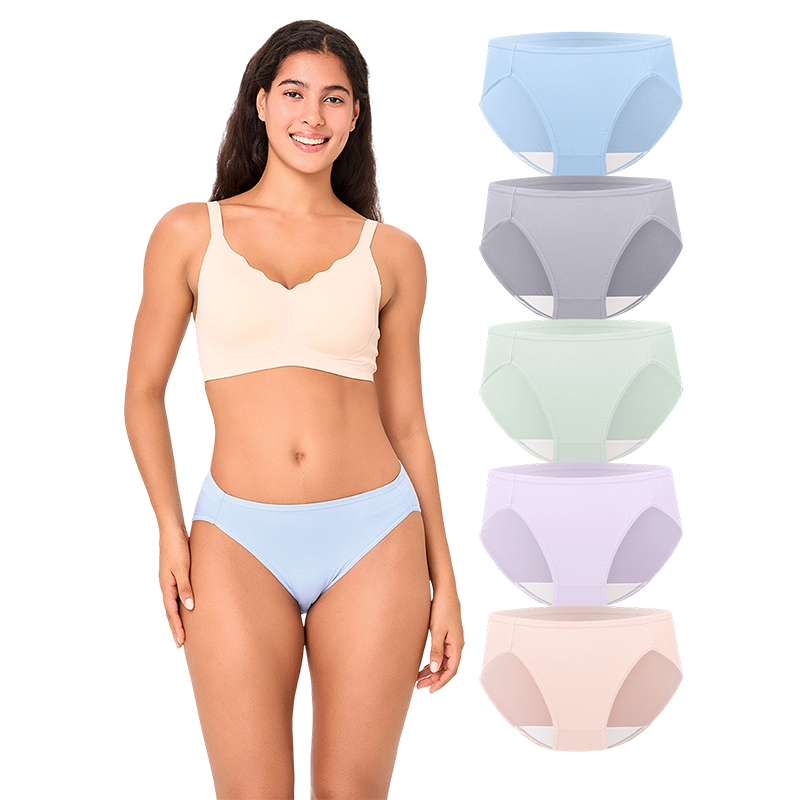
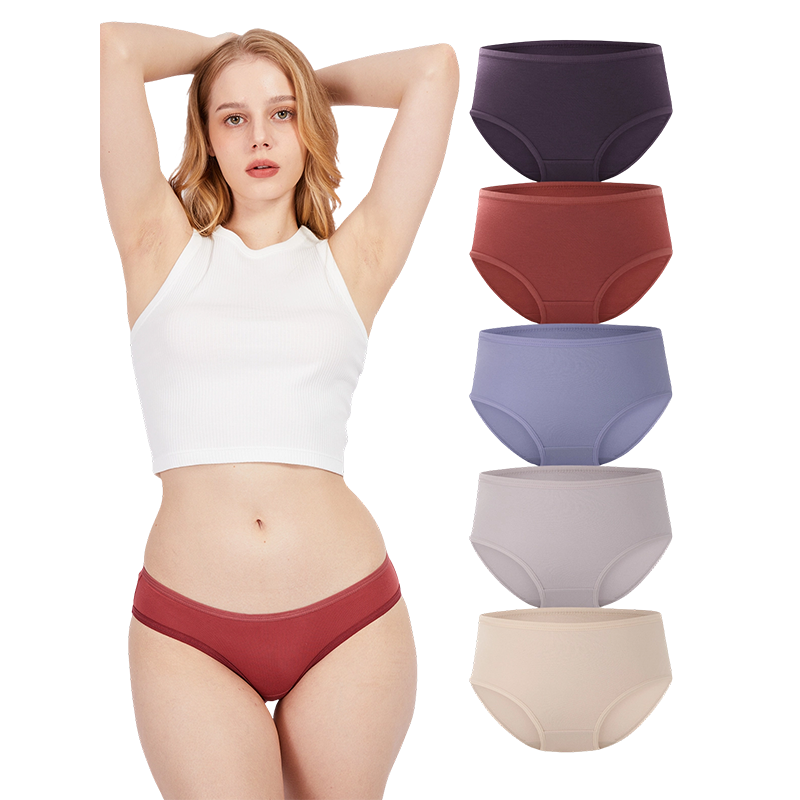
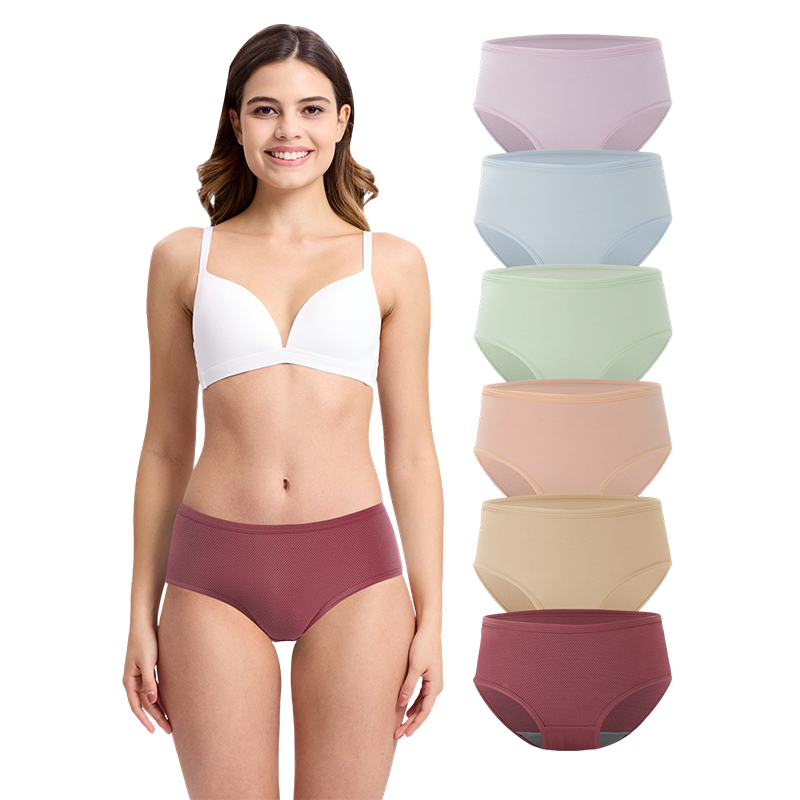
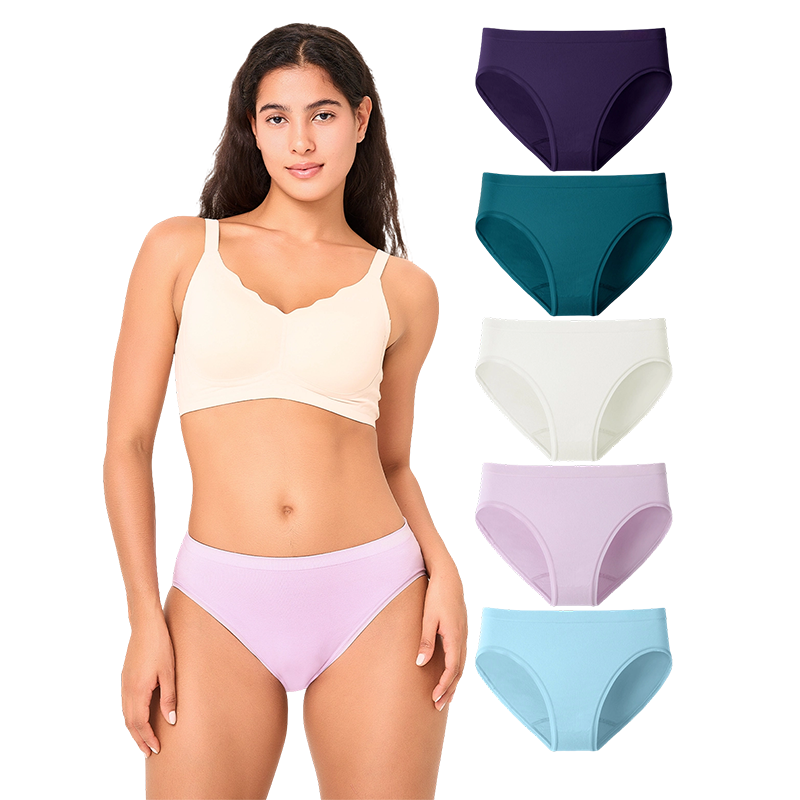
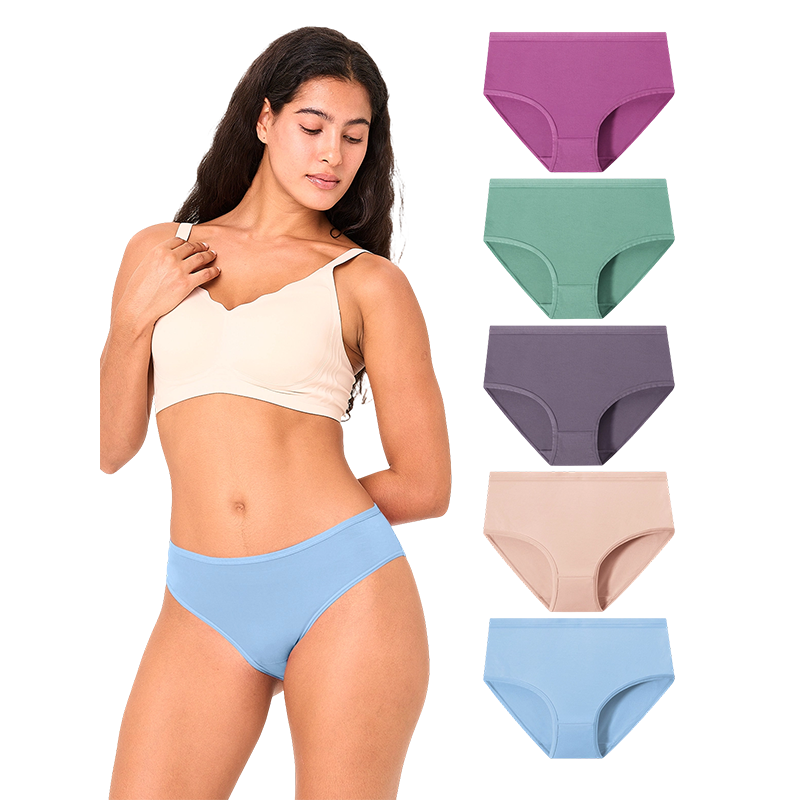
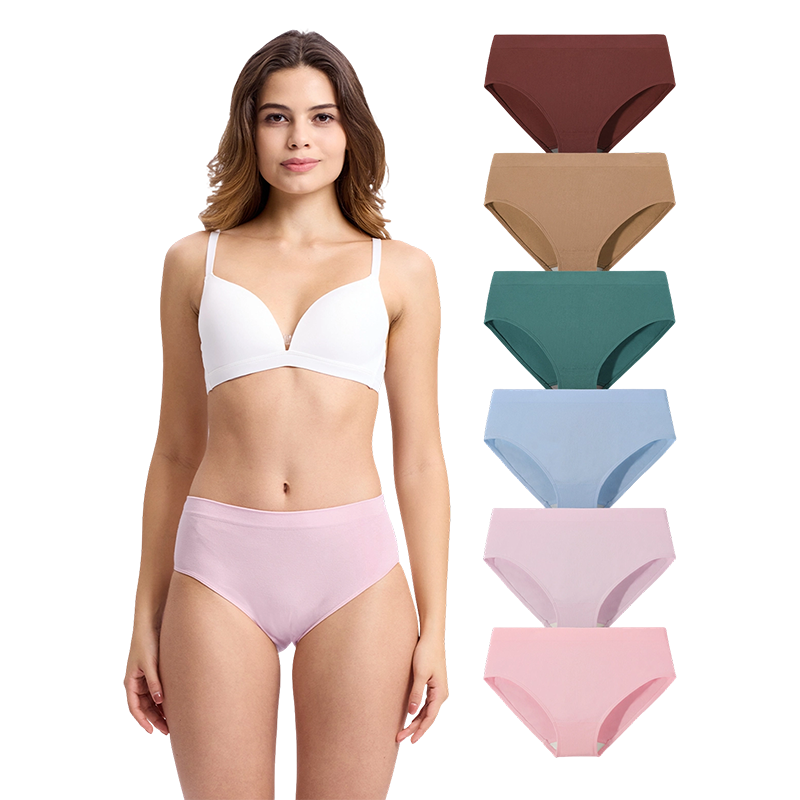
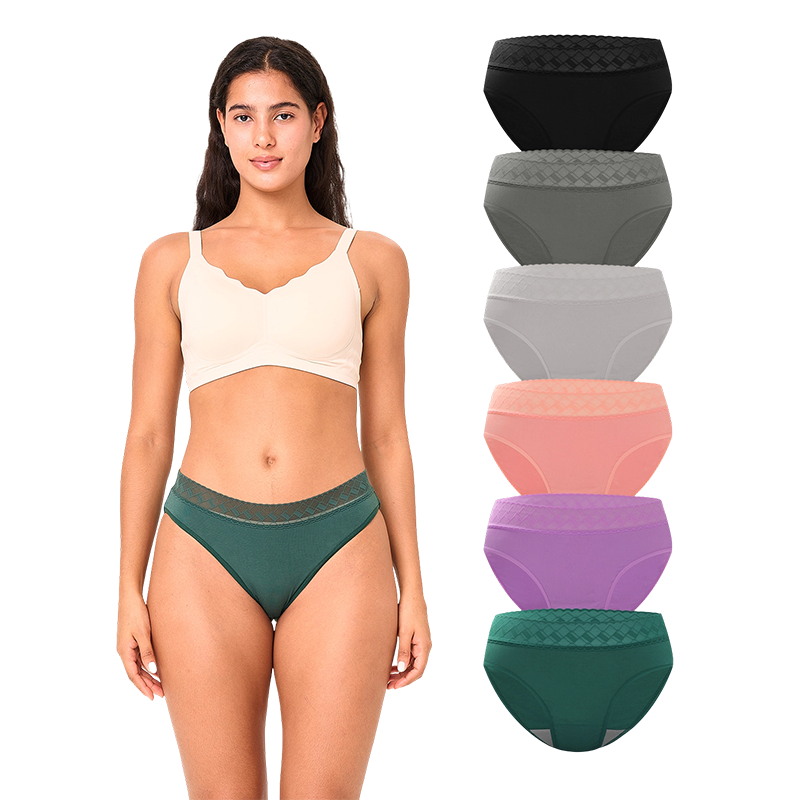
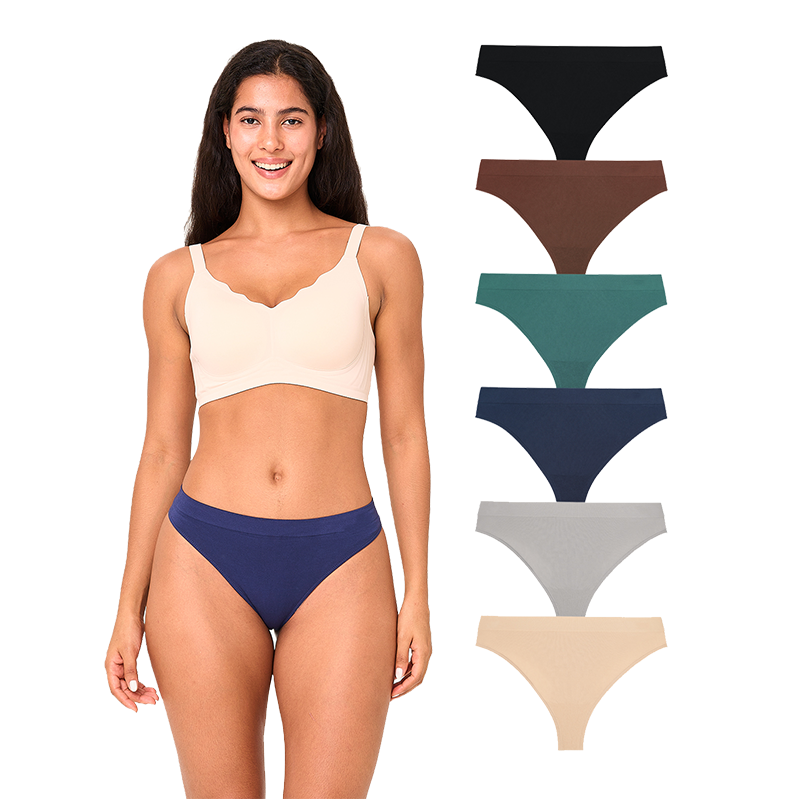
KEY CRITERIA
5 Things to Consider When Choosing Period Panties
Period panties have become a go-to choice for people seeking a comfortable, sustainable alternative to disposable products. But with so many styles, absorbency levels, and fabric options on the market, it can be hard to know where to start.
The five most important dimensions to evaluate are: absorbency level (matched to your flow), fabric and comfort, style and cut, care requirements, and long-term value. The sections below walk through each in detail.
Period Panties: Quick Selection Guide
Dimension
What to Look For
Best For
Absorbency
Light / Medium / Heavy — match your cycle's flow
Everyone; heavy flow → heavy absorbency
Fabric Comfort
Organic cotton, bamboo, modal — natural fibres first
Sensitive skin, allergy-prone users
Style & Cut
High-waist, boy short, bikini — coverage vs activity
Athletes, office workers, nighttime use
Care Ease
Machine-washable, quick dry, shape retention after wash
Busy lifestyles with limited laundry time
Long-term Value
Unit price × lifespan vs annual disposable spend
Cost-conscious, sustainability-focused shoppers
HOW THEY WORK
How Do Period Panties Actually Work?
The secret lies in a multi-layer composite construction. Each layer plays a specific role in a coordinated fluid management system — wicking, absorbing, blocking, and protecting — all within the thickness of a regular pair of underwear.
1
Moisture-Wicking Layer
The innermost layer sits against your skin, rapidly drawing fluid away from the surface to keep you feeling dry.
2
High-Absorption Core
The middle core — often microfibre or natural fibre blend — locks fluid in place, holding the equivalent of several pads' worth of flow.
3
Leak-Proof Barrier
A breathable waterproof membrane stops fluid from passing through to the outer layer while allowing vapour to escape, preventing a stuffy feel.
4
Soft Outer Fabric
The exterior looks and feels like any regular underwear — comfortable, discreet, and available in a range of styles and cuts.
Key principle: The three-stage "wick → absorb → block" system keeps skin dry while preventing leaks — something single-layer disposable pads simply cannot replicate.
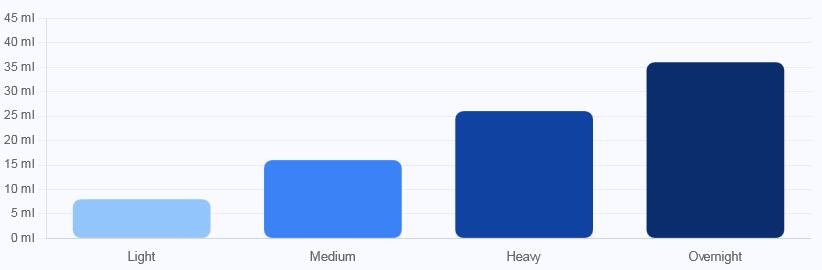
Absorbency Levels by Product Type (ml)
Maximum absorption capacity reference for each absorbency tier
Light ≈5–8 ml Medium ≈12–18 ml Heavy ≈22–30 ml Overnight ≈30–40 ml
BENEFITS
What Are the Benefits of Using Period Panties?
Period panties are more than just a hygiene product — they represent a healthier, greener, and more economical approach to menstrual care. Here's why more and more people are making the switch:
-
1
Body-Safe Materials: No synthetic fragrances, bleach, or chemical additives. Gentler on sensitive skin and less likely to disrupt the vaginal microbiome.
-
2
Superior Comfort: Wears just like everyday underwear — no pad friction, no tampon pressure. Ideal for sleeping, exercising, and long days out.
-
3
Eco-Friendly: Each pair can last 2–5 years, significantly reducing the hundreds of single-use plastic products disposed of every year.
-
4
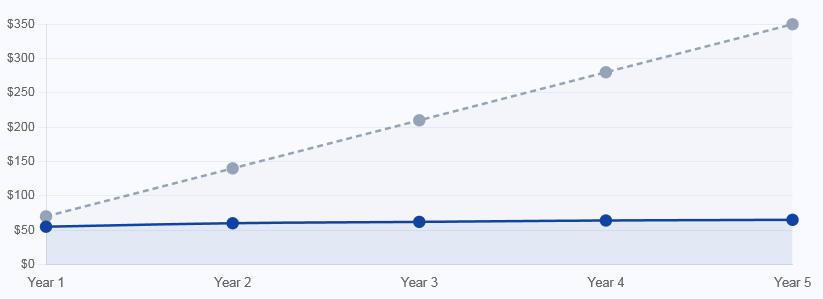
Long-Term Savings: One upfront investment, years of use. Compared to monthly disposable costs, the savings over five years can be substantial (see chart below).
-
5
Confidence On-the-Go: Reliable leak protection means fewer anxiety-driven bathroom checks, letting you focus on your day whether at work, school, or the gym.
-
6
Pairs With Other Products: Can be worn alongside menstrual cups or tampons as a backup layer, virtually eliminating the risk of unexpected leaks.
5-Year Cumulative Cost Comparison: Period Panties vs Disposables
Based on average monthly usage estimates (USD)
Period Panties (cumulative) Disposables (cumulative)
CHANGE FREQUENCY
How Often Should You Change Period Panties?
There's no one-size-fits-all answer. The right frequency depends on your personal flow, the absorbency level of the product you've chosen, and your daily activity. Use the guide below as a practical starting point:
| Use Case |
Recommended Change |
Absorbency Needed |
Suggested Style |
| Days 1–2 (heavy flow) |
Every 6–8 hours |
Heavy (≥20 ml) |
Heavy Absorbency |
| Days 3–4 (medium flow) |
Every 8–10 hours |
Medium (12–18 ml) |
Standard Cut |
| Final days (light flow) |
Once daily |
Light (5–10 ml) |
Light / Thin Style |
| Overnight sleep |
Full night, change on waking |
Overnight (≥30 ml) |
High-Waist Overnight |
| Sports / exercise (backup) |
Change after workout |
Light backup |
Sport Style |
| Daily discharge (non-period) |
Every 12 hours |
Ultra-light |
Everyday Liner Style |
Important: Even if the panty still feels "dry," do not go beyond 12 hours without changing. Prolonged wear can encourage bacterial growth and compromise hygiene.
CARE & WASHING
How to Wash Period Panties
Proper care directly affects both hygiene and product lifespan. Follow these five steps to keep your period panties performing at their best for years.
1
Rinse Immediately in Cold Water
After removing, rinse straight away under cold (not hot) water. Cold water breaks down blood proteins before they bind to fibres. Hot water sets stains permanently.
2
Hand-Wash or Use a Laundry Bag
Gently hand-wash with a mild, fragrance-free detergent, or place in a mesh laundry bag and machine-wash on a cold gentle cycle (≤30°C). Avoid fabric softener — it clogs absorbent fibres.
3
No Bleach or Harsh Cleaners
Bleach and heavy-duty detergents damage the functional layers — particularly the leak-proof membrane — drastically reducing the product's effective lifespan.
4
Air-Dry Only — No Tumble Dryer
Lay flat or hang in a ventilated area. High heat from tumble dryers degrades the waterproof membrane and causes elastic fibres to age and deform prematurely.
5
Store Completely Dry
Ensure the panty is fully dry before storing. Damp storage encourages bacteria and mould growth. Keep in a cool, dry drawer away from compressed fabrics.
| Care Factor |
Do This |
Avoid This |
| Water temperature |
Cold or warm water (≤30°C) |
Hot water (≥40°C) |
| Detergent |
Mild, fragrance-free liquid detergent |
Fabric softener, bleach, enzyme cleaners |
| Wash method |
Hand-wash or mesh bag, gentle cycle |
Direct high-heat machine wash |
| Drying |
Air-dry flat or hanging in ventilated space |
Tumble dryer on any heat setting |
| Storage |
Fully dry, in a cool dry drawer |
Damp storage or sealed airtight bags |
STYLES
What Different Styles of Period Panties Are Available?
Today's period panties come in a wide range of cuts and constructions to suit every body type, lifestyle, and preference. Understanding the differences helps you build a collection that covers every situation.
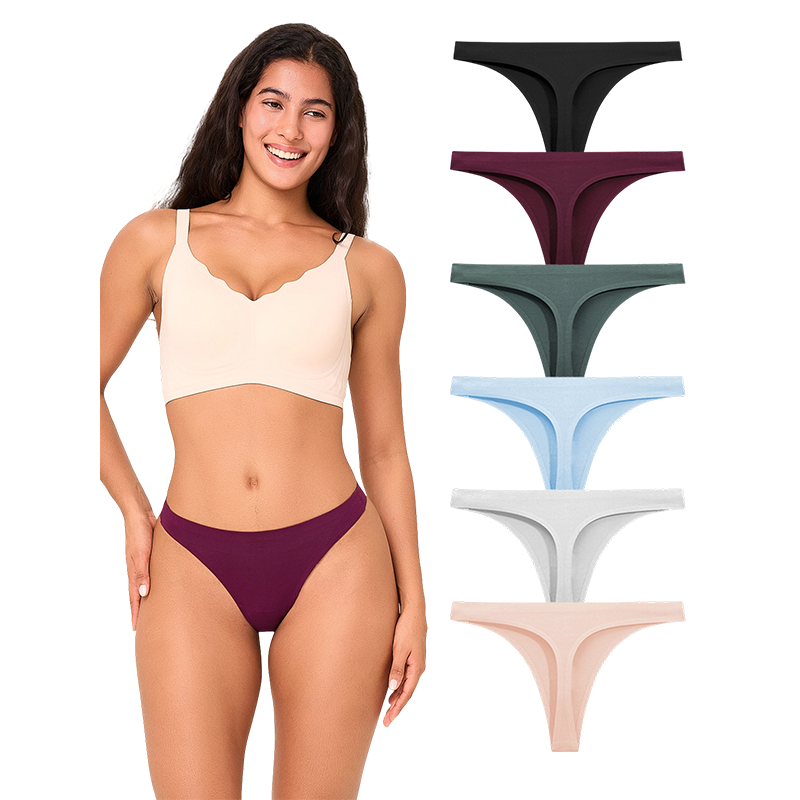
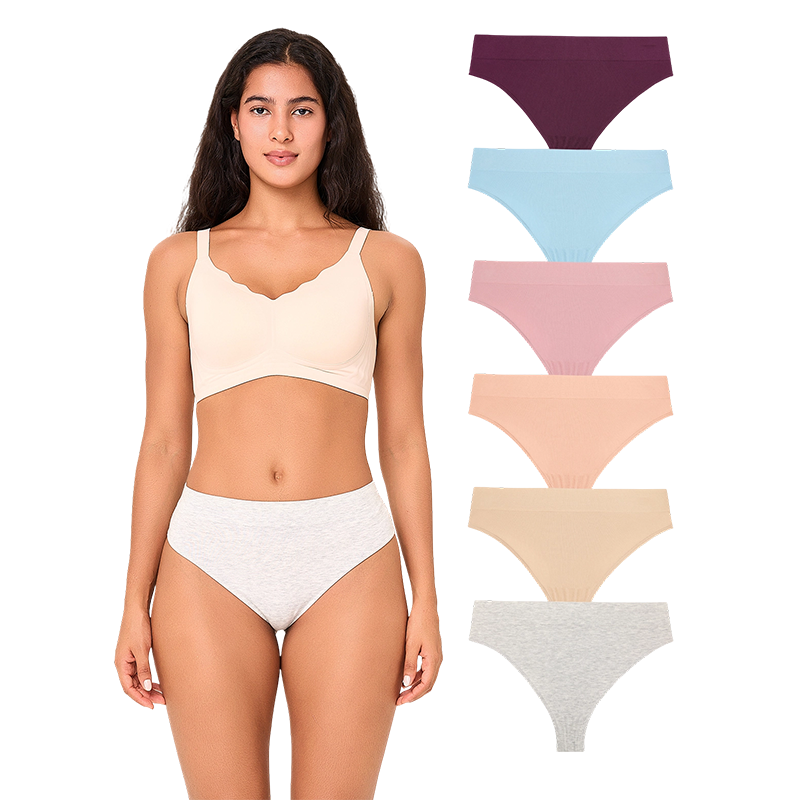
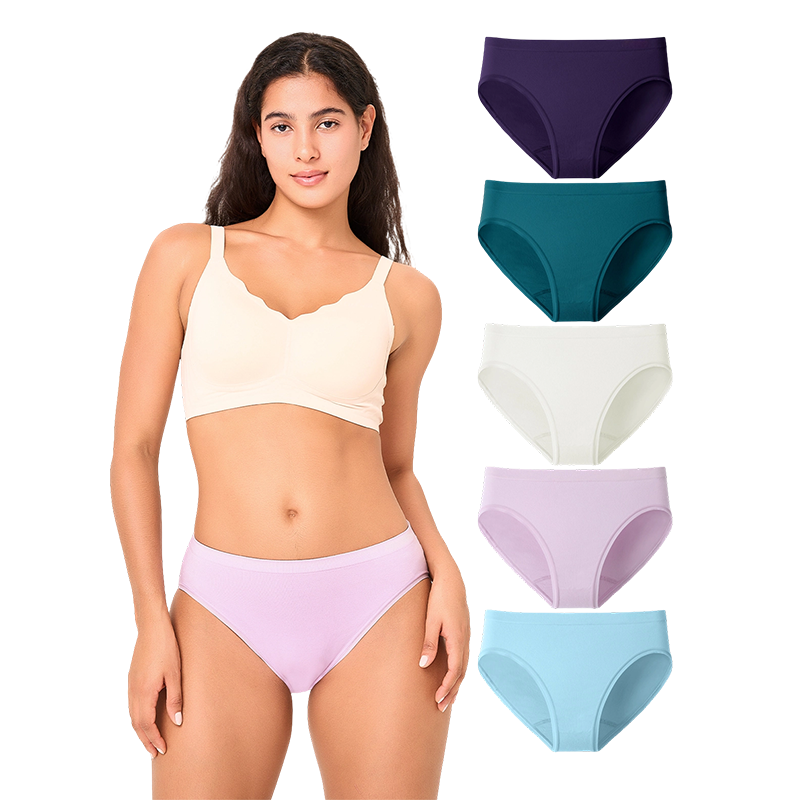
Bikini
Classic low-rise cut with moderate coverage. Perfect for lighter flow days or as backup alongside a cup. Versatile and discreet under most clothing.
Light flow
High-Waist
Waistband sits at or above the navel for full abdominal coverage. Excellent for heavy days and overnight use. Also provides warmth and light tummy support.
Heavy flow / Night
Boy Short
Maximum coverage with full thigh coverage. Outstanding leak protection for side-sleeping and active movement. Casual, relaxed fit for everyday wear.
Sport / Sleep
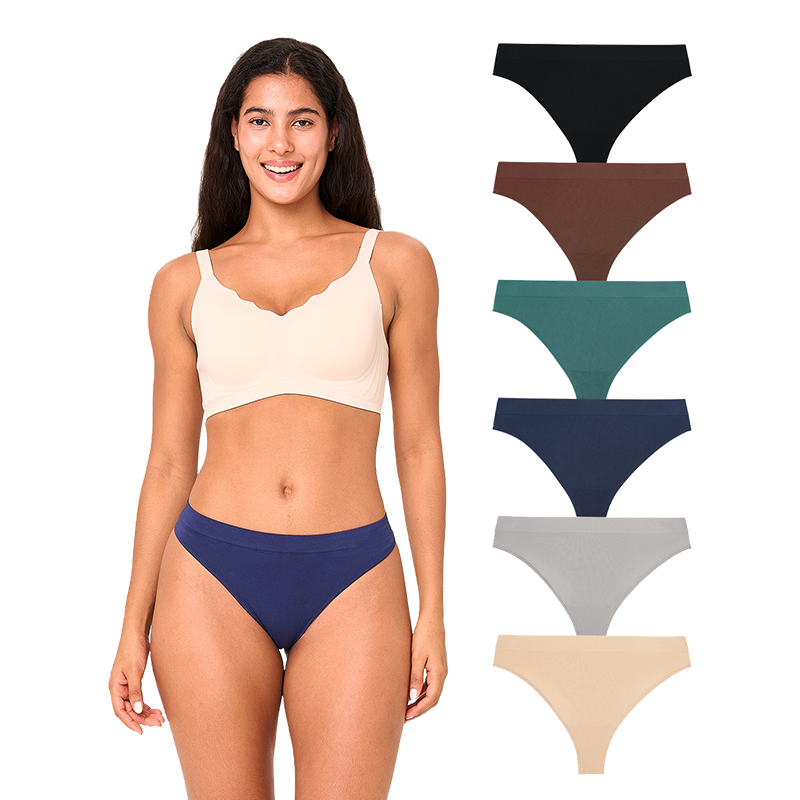
Thong
Designed to eliminate visible panty lines. Absorbent gusset concentrated at the front. Best for the tail-end of your period or paired with a tampon or cup.
Light / End of cycle
Sport / Active
High-stretch, quick-dry fabrics engineered for movement. Reinforced absorbent panels handle the demands of yoga, running, cycling, and gym sessions.
Active lifestyle
Overnight Extended
Extended front-to-back gusset with maximum absorption. Engineered for every sleep position — rolling, side-lying, and everything in between.
Overnight only
Style Preference Distribution Among Users
Based on user habit survey data (for reference only)
High-Waist 32% Bikini 25% Boy Short 22% Sport 12% Overnight 6% Thong 3%
FABRIC GUIDE
Fabric Selection: The Often-Overlooked Detail
Fabric choice directly affects skin comfort, breathability, and long-term safety — especially during menstruation, when the cervix is slightly open and vaginal mucosa is more sensitive. Here's a comparison of the most common materials:
| Fabric |
Key Properties |
Breathability |
Sensitive Skin |
Sustainability |
| Organic Cotton |
Soft, no chemical residues, strong moisture absorption |
Excellent |
Best |
High |
| Modal |
Silky smooth, great stretch, retains shape after washing |
Good |
Good |
Medium |
| Bamboo Fibre |
Natural antibacterial, moisture-wicking, eco-sourced |
Excellent |
Good |
High |
| Recycled Nylon |
High-stretch, durable, quick-drying — ideal for sport styles |
Moderate |
Moderate |
Medium-High |
| Synthetic Blend |
Lower cost, stable shape, but poor breathability |
Poor |
Not Ideal |
Low |
From our experience in textile development, fabric selection during menstruation matters more than on ordinary days. The cervix is partially open during this time and vaginal tissue is more vulnerable to irritation. Any non-breathable material or residual chemicals can worsen discomfort. We strongly recommend prioritising organic cotton or bamboo fibre, and looking for recognised textile safety certifications such as Oeko-Tex Standard 100 — the most direct way to protect your body.
About Nantong Tianhong Textile Technology Co., Ltd.
Established in 2001, Tianhong has dedicated over two decades to the research, manufacturing, and sales of underwear products, with sustainable development at the core of everything we do. We focus on eco-friendly functional fabrics and offer traceable, high-quality supply chain management to our customers.
Located in Nantong — the heartland of China's textile industry — we provide OEM/ODM services for renowned labels across Europe, North America, and the domestic Chinese market. Our products hold FSC, OCS, and Oeko-Tex 100 certifications, reflecting our commitment to the strictest standards in raw material sourcing and production.
FSC OCS Oeko-Tex 100 OEM / ODM



 Room 806, Building D, Jingyang Plaza, Chongchuan District, Nantong City, Jiangsu Province,china
 English
 Español
 русский
 عربى
عربى