Content
For most underwear lines, modal-spandex jersey is the best all-round choice when you want a soft, stable, mid-to-premium product. Cotton-spandex is the safest base for everyday value lines, bamboo viscose suits brands built around an ultra-soft hand, and nylon blends are the right call for seamless, sport and no-show styles. No single fabric wins on every measure, so the right pick depends on your price tier, the style you are making and how your customers wash and wear it.
This guide compares the four fabric families brands ask about most, explains where each one performs and where it falls short, and ends with a simple sample-testing routine you can run before committing to bulk production.
Fiber names on a spec sheet only tell part of the story. Before you compare cotton, modal, bamboo viscose and nylon, decide which of these five criteria matter most for the product you are building. Each one pulls the decision in a different direction.
How the fabric feels against skin and how it drapes. Smooth, fluid fabrics read as premium; crisp, dry fabrics read as classic basics.
How much sweat the fabric absorbs and how fast it dries. This matters most for warm climates, sport styles and long wearing hours.
How far the knit stretches and whether it returns to size. Poor recovery shows up as baggy seats and loose waistbands after a few washes.
Shrinkage, pilling, color loss and thinning after repeated washing. This is where cheap fabrics reveal themselves.
Price per kilogram, minimum fabric orders and how stable the supply is. A great fabric you cannot reorder is a risk to your line.
Cotton is still the reference point for underwear because customers already trust it. It absorbs sweat well, feels familiar against the skin, and dyes, prints and sews without drama. In knit form, cotton with about 5 to 8 percent spandex gives comfortable stretch for briefs, boyshorts, trunks and boxer briefs.
The limits are just as familiar. Cotton holds moisture and dries slowly, so it can feel damp in hot weather or during exercise. It can shrink in the first few washes if the fabric was not pre-shrunk or compacted, and dark colors tend to fade sooner than they do on synthetic blends. Yarn quality changes the result a lot: combed and compact-spun yarns feel smoother and pill less than basic carded yarns.
Value multipacks, everyday basics, and lines marketed around a natural-fiber feel.
Watch forShrinkage, slow drying, and waistband growth when spandex content is too low.
Modal is a regenerated cellulose fiber made from beech wood pulp. In underwear it is usually knitted as modal-spandex jersey or blended with cotton. The fabric has a smooth, slightly silky hand, drapes cleanly, and tends to hold its size and shape through repeated washing better than many plain cotton knits. It also avoids the stiff, rough feel cotton can develop over time.
Micro modal uses finer fibers for a lighter, softer fabric at a higher price. It suits premium everyday and sleep-adjacent lines where hand feel is the main selling point. The trade-off is cost and handling: like other regenerated cellulose fibers, modal is weaker when wet than cotton, so rough machine washing can wear it faster than a sturdy cotton knit. Good yarn and a well-chosen spandex content keep this under control.
Premium everyday underwear, women's briefs and boyshorts, men's boxer briefs with a soft-touch positioning.
Watch forHigher fabric cost, lower wet strength, and large quality differences between yarn suppliers.
Bamboo viscose is made by dissolving bamboo pulp and spinning it into fiber through the viscose process. The result is a regenerated cellulose fiber, not a raw bamboo fiber. The hand feel is very soft and fluid, the fabric absorbs moisture readily, and the price sits between cotton and modal. That combination makes it popular for soft-touch underwear, loungewear and sleepwear.
Brands should keep three points in mind:
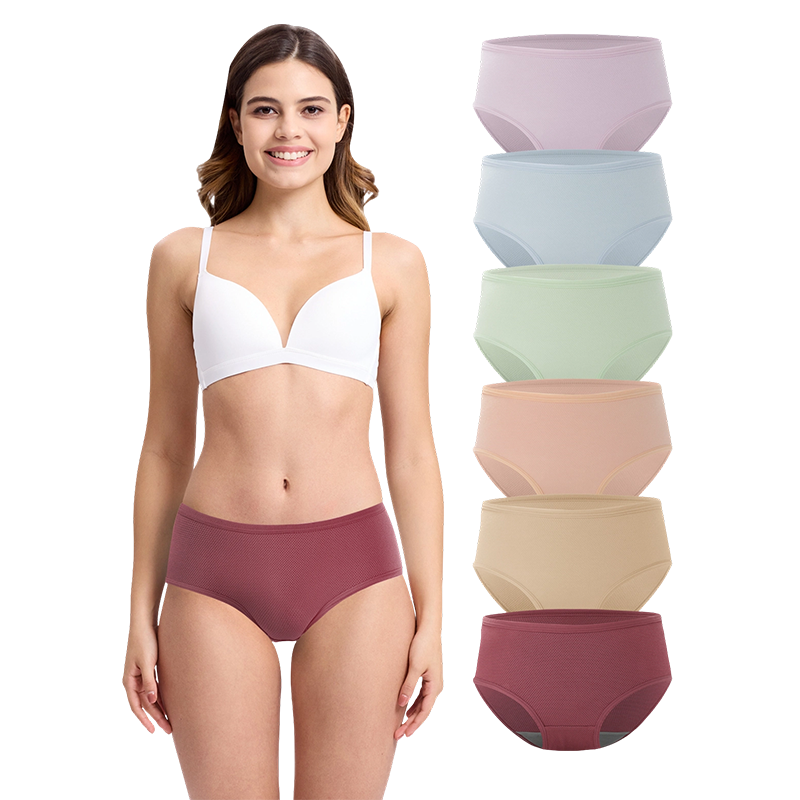
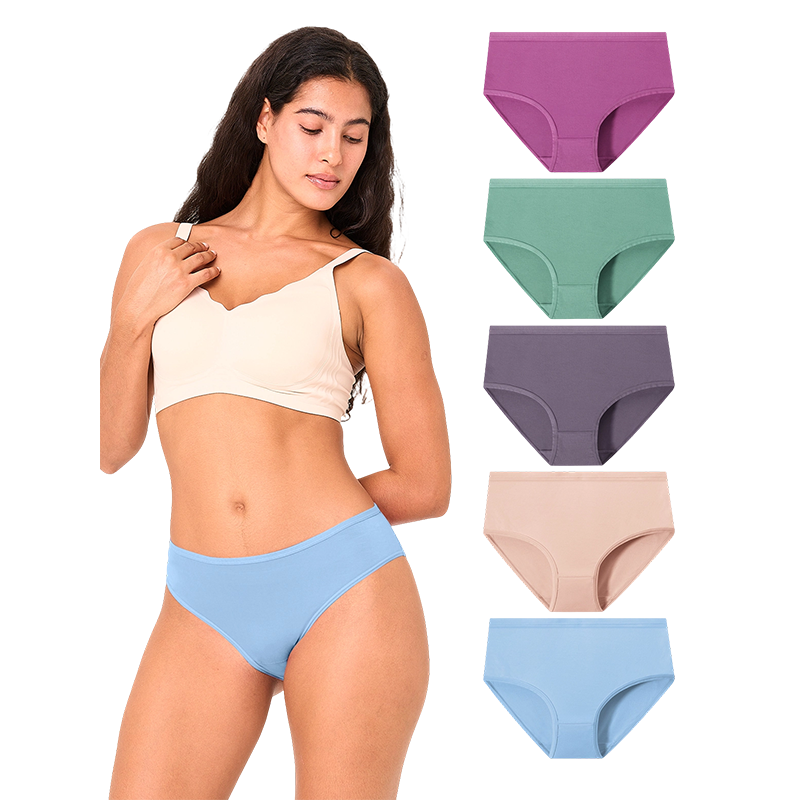
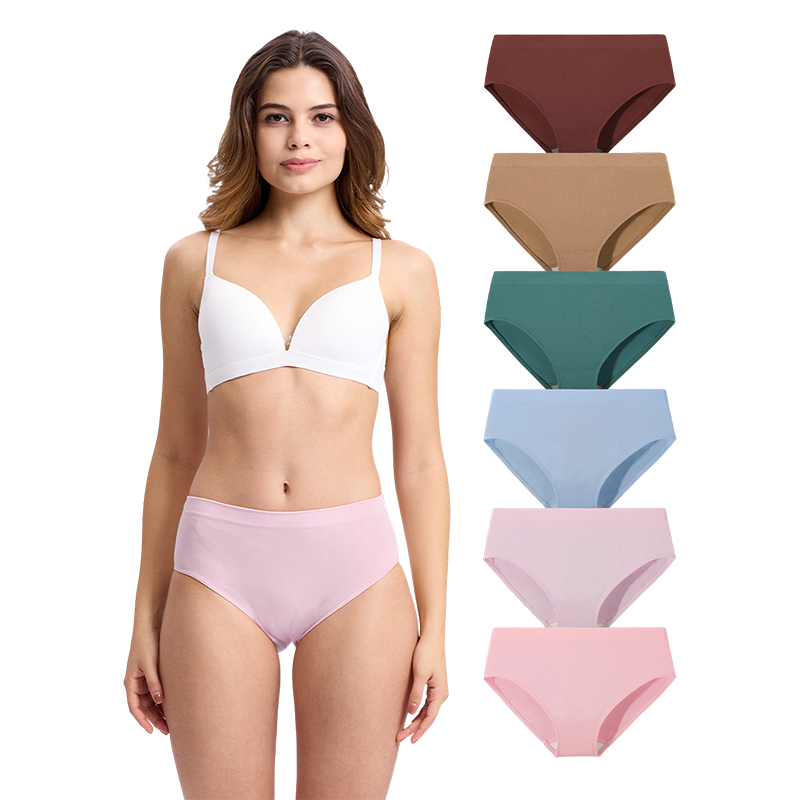
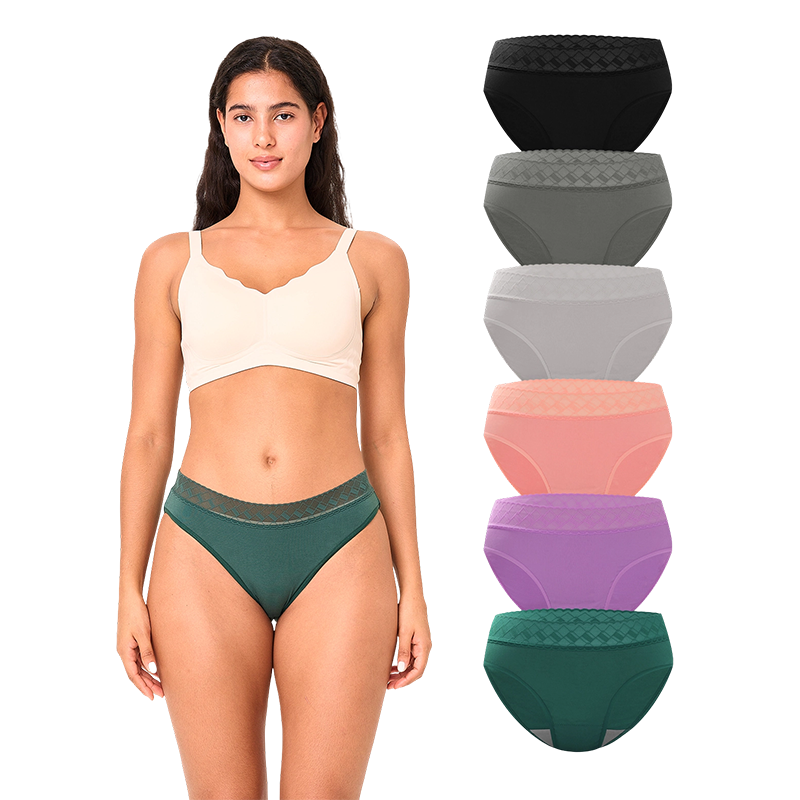
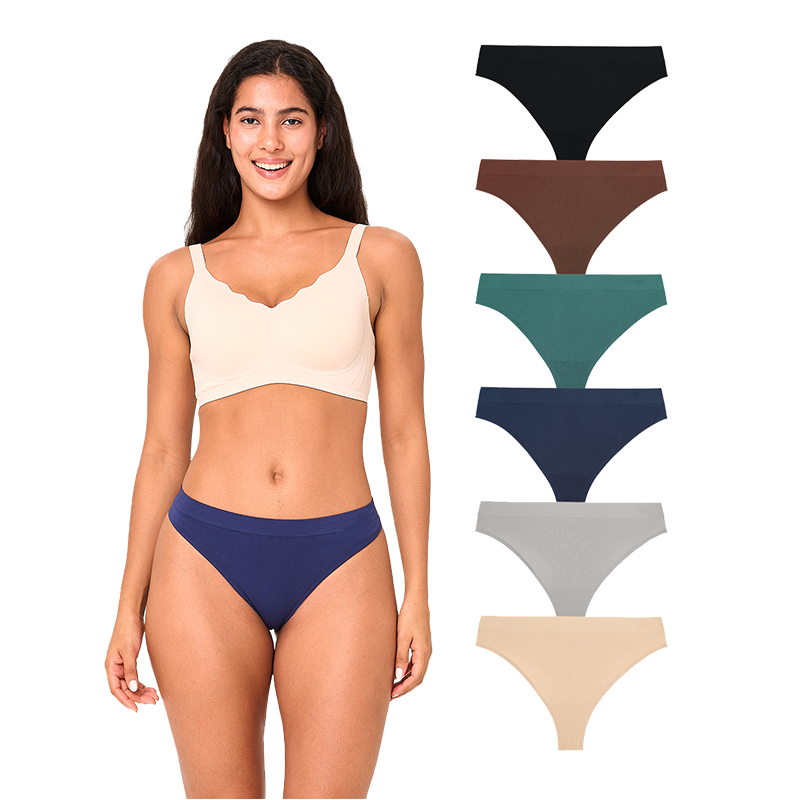
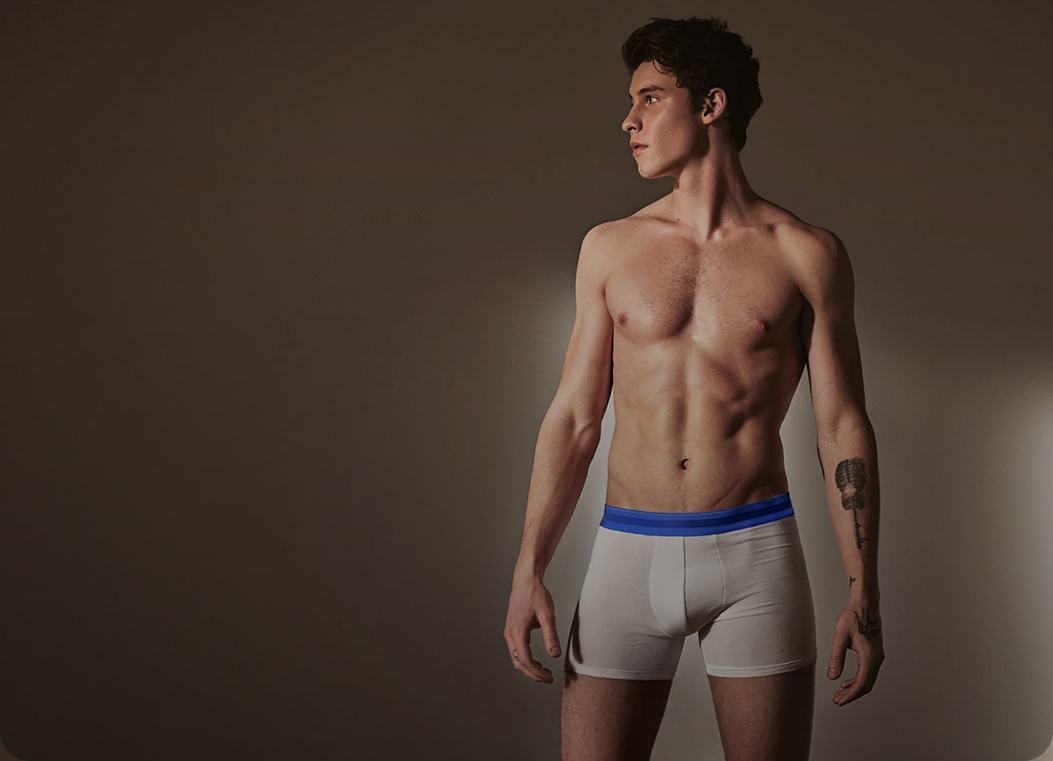
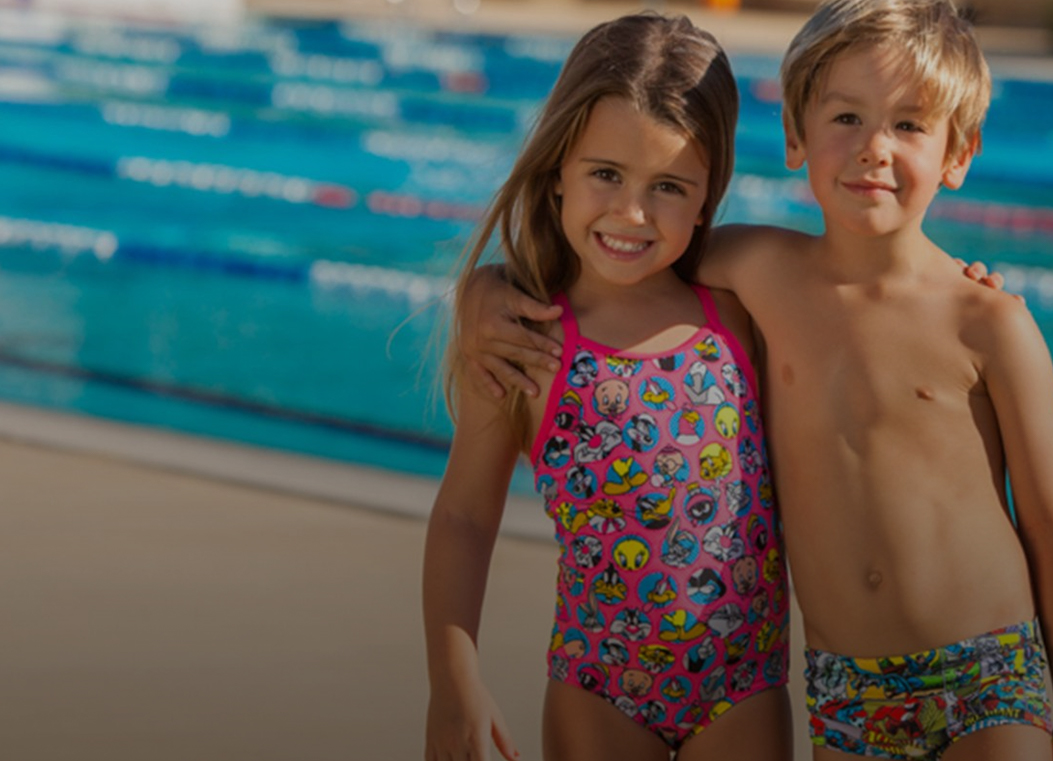
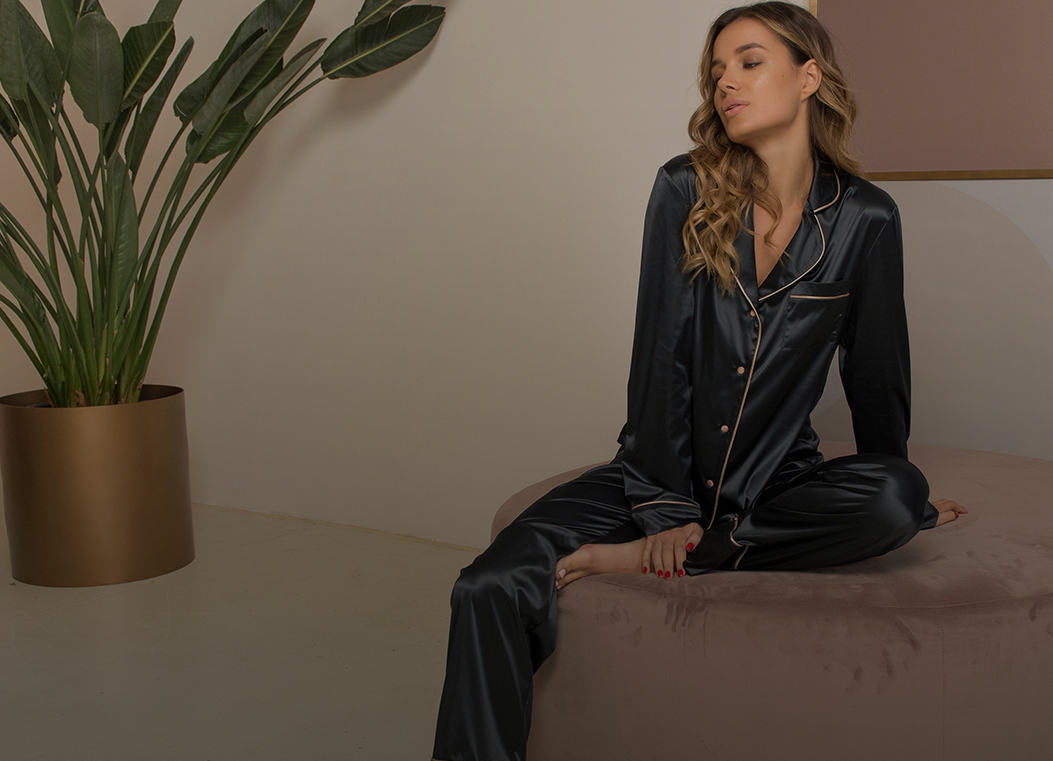
Here are two bamboo viscose blend styles from our range, so you can see the fabric in finished garments:
Nylon (polyamide) blended with spandex is the base of most seamless underwear and many sport and no-show styles. Circular knitting machines can shape a whole garment in one piece, and nylon yarn gives the smooth surface and strong stretch recovery that bonded or laser-cut edges need. Seamless blends often carry 10 to 20 percent spandex, noticeably more than cotton jersey, because the garment relies on stretch to fit.
Nylon dries fast, resists abrasion and lies flat under clothing. Its weak point is moisture: it absorbs very little, so a dense nylon knit can feel warm and slick in heat. Designers solve this with ventilated mesh zones, lighter knit structures, or a cotton or modal lining in the gusset. Static cling and a less natural surface feel are the other trade-offs customers sometimes notice.
Seamless briefs, thongs and boyshorts, sport underwear, no-show lines, and shapewear-style products.
Watch forWarmth in dense knits, low absorbency, and the need for a breathable gusset lining.
The table below summarizes typical behavior for good-quality knit fabrics in each family. Individual results shift with yarn, weight and finishing, so treat it as a starting point for sampling rather than a final verdict.
| Property | Cotton | Modal | Bamboo viscose | Nylon blend |
| Hand feel | Familiar, dry to soft | Smooth, silky | Very soft, fluid | Smooth, slick |
| Moisture absorption | High | High | High | Low |
| Drying speed | Slow | Medium | Medium | Fast |
| Shape retention | Good with spandex | Very good | Fair to good | Excellent |
| Pilling risk | Low to medium | Low | Medium | Low |
| Relative cost | Low to medium | Medium to high | Medium | Medium |
| Best fit | Basics, multipacks | Premium everyday | Soft-touch, lounge | Seamless, sport, no-show |
Start from the customer and the price point, then work back to the fabric. These pairings are the ones that come up most often in brand development.
Two fabrics with the same fiber name can feel and wear very differently. Three technical choices decide most of the gap.
Around 5 percent gives light, comfortable stretch. Between 8 and 10 percent gives firm recovery for fitted styles. Going higher without a reason can make a garment feel tight and reduce breathability. Seamless knits are the exception because shaping depends on higher stretch.
Weight is measured in grams per square meter (GSM). Lightweight underwear jersey commonly sits around 120 to 160 GSM and mid-weight around 160 to 200 GSM. Heavier is not automatically better: a dense fabric can feel warm and bulky, while one that is too light may show through or wear out sooner.
Single jersey is light and stretchy but curls at cut edges, which makes sewing harder. Interlock is thicker, smoother on both sides and more stable. Rib adds stretch across the width. Mesh and pointelle structures add ventilation. The right structure often matters more to comfort than switching to a more expensive fiber.
Finishing also changes the result. Pre-shrinking, enzyme washing and a soft handle treatment can turn an average fabric into a good one, and skipping them can ruin an excellent one.
Ask for swatches or sample garments in two or three candidate fabrics at the same weight, then run the same tests on each. Comparing like with like keeps the decision honest.
Want to see how these fabrics behave in finished garments? Browse our men's underwear, women's underwear and seamless underwear ranges, or talk to us about OEM development with your own fabric targets.
Modal or micro modal blended with spandex is the most common choice for premium everyday underwear. It combines a smooth hand, good shape retention and an upscale look. Cotton-modal blends are a good step down in price.
It depends on your goal. Modal is softer, more stable and usually looks more premium, but it costs more and is weaker when wet. Cotton is cheaper, familiar to customers and very absorbent. Many brands run both in different price tiers.
Yes, if you test it properly. It offers a very soft hand at a mid-range cost. Run wash tests for shape retention and pilling, and describe the fabric by what it does, such as softness and moisture absorption, rather than by claims about the raw plant.
For cotton, modal and bamboo viscose jersey, roughly 5 to 10 percent works for most styles. Seamless nylon knits often use 10 to 20 percent because the garment depends on stretch for its fit.
Yes, and it is common. A seamless nylon body with a cotton gusset lining, or a modal body with mesh side panels, lets each fabric do the job it is best at. Just confirm that the fabrics shrink and fade compatibly.
Two or three at the same weight is enough. More than that slows decisions without improving them. Test each candidate with the same wash, stretch, color and wear routine so the results can be compared directly.

Copyright © Nantong Tianhong Textile Technology Co., Ltd. All Rights Reserved.
 Room 806, Building D, Jingyang Plaza, Chongchuan District, Nantong City, Jiangsu Province,china

 English
 Español
 русский
 عربى